Flaming Mountain

Flaming Mountains: Why the Red Mountain Range from Journey to the West is Worth a Stop

Why the Flaming Mountains Live Up to Their Name

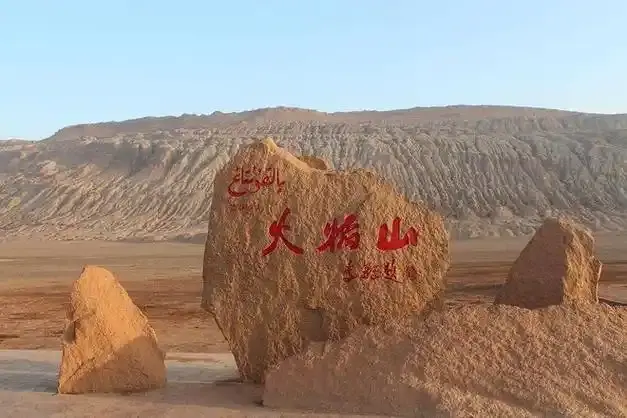
I still remember the first time I saw the Flaming Mountains (Huoyan Shan) on a June afternoon in 2023. Our minivan from Turpan was approaching from the east, and at first, I thought my eyes were playing tricks on me. The mountain range rising from the desert floor wasn’t the dull brown or grey you’d expect from a typical mountain — it was an intense, burning red that seemed to literally glow under the midday sun. My traveling companion, a photographer from Beijing, immediately asked our driver to pull over. “We have to shoot this now,” she said, “before the light changes.”

The experience stayed with me not because it was a “famous attraction,” but because the place feels genuinely otherworldly. There’s a reason why this landscape has inspired legends for over a thousand years, and why it became one of the most memorable stops on my three-week Xinjiang journey.

Flaming Mountains

The Geology Behind the Red Color

The Flaming Mountains are part of the Tian Shan mountain range, but what makes them visually striking is their composition. The range is primarily made of red sandstone and conglomerate formations from the Jurassic and Cretaceous periods — essentially, these rocks are around 70 to 140 million years old. The iron oxide in the sandstone is what gives the mountains their characteristic crimson and orange hues.

What’s fascinating is how the color changes throughout the day. I visited twice: once at noon (which I don’t recommend, more on that later) and once at around 6 PM. At noon, under the harsh summer sun, the mountains look almost white-hot, a blinding reflection of light that justifies the “flaming” name. But in the late afternoon, the sandstone takes on deeper crimson and burnt-orange tones, with shadows from the eroded ridges creating dramatic textures that are a dream for photographers.

The highest peak in the Flaming Mountains reaches about 831 meters, but what’s more impressive than the height is the length — the range stretches for about 100 kilometers (62 miles) along the northern edge of the Turpan Depression. This is the hottest place in China, and the mountains play a big role in that. They block moisture from the north, trapping heat in the Turpan Basin and creating the extreme temperatures that have made this region famous.

The Journey to the West Connection

You can’t talk about the Flaming Mountains without mentioning Journey to the West (Xi You Ji). If you grew up in China or have any familiarity with Chinese literature, you know that the Flaming Mountains are where the Monkey King (Sun Wukong) had to borrow a magical fan from Princess Iron Fan to put out the flames and allow his master to cross.

The connection is so deeply embedded in Chinese culture that the site has leaned into it heavily. There’s a large golden statue of Sun Wukong at the main scenic area, and honestly, it’s a bit kitschy. When I first saw it, I rolled my eyes a little. But then I watched a group of Chinese tourists — families with children, elderly couples, teenagers taking selfies — and realized that for them, this wasn’t just a geological site. It was a place where literature and landscape converge. The story of the Monkey King battling the flames to protect his master resonated with people in a way that “Jurassic sandstone formations” never could.

That said, you don’t need to be a Journey to the West fan to appreciate the place. The geological reality is impressive enough. Just be prepared for the fact that the site plays up the literary connection quite heavily, with themed statues, painted murals telling the story, and even a thermometer monument that supposedly shows the ground temperature (it read 68°C when I was there in June — whether that’s accurate or theatrical, I’ll leave to your judgment).

xinjiangtraveltips.com/wp-content/uploads/2026/06/flaming_mountains_02.jpg” alt=”Flaming Mountains landscape Turpan Xinjiang” />

Best Time for Photography and Visiting

If you’re planning a visit, timing is everything. The Flaming Mountains are in an extreme desert climate, and I cannot overstate how hot it gets here in summer. When I visited in mid-June 2023, the air temperature was around 43°C (109°F), and the ground temperature was significantly higher. The heat radiates up from the sand and off the red rocks, creating a shimmering effect that looks beautiful in photos but feels punishing in person.

Here’s my advice on timing:

For photography: The golden hours are your best friend here. Aim for either sunrise (around 6:00-7:00 AM in summer) or two hours before sunset (around 7:00-9:00 PM). The low-angle light makes the red sandstone glow, and the long shadows across the ridges create depth and texture. If you’re serious about photography, the evening light is slightly better because the mountains face roughly west, so the setting sun illuminates them directly.

For general visiting: Spring (April-May) and autumn (September-October) are the most comfortable seasons. Daytime temperatures are still warm but manageable — around 20-30°C (68-86°F). In winter, it’s surprisingly cold for such a hot place, with temperatures dropping below freezing at night.

What about summer? Yes, it’s extremely hot. But if summer is the only time you can visit Xinjiang, don’t skip the Flaming Mountains. Just go early in the morning, bring at least 2 liters of water per person, wear a wide-brimmed hat, and limit your time at the exposed scenic area to under an hour. The heat is no joke — I saw a fellow tourist get dizzy and have to sit in the shade for twenty minutes to recover.

Combining Flaming Mountains with Jiaohe Ruins and Bezeklik Caves

One of the best things about the Flaming Mountains is its location. It sits roughly halfway between Turpan city and two other major attractions: the Jiaohe Ruins and the Bezeklik Thousand-Buddha Caves. This makes it easy to plan a day trip that covers all three sites without too much backtracking.

Here’s the routing that worked well for me: Start early (around 8:00 AM) with the Jiaohe Ruins, when the temperature is still bearable and the morning light is good for photography. Jiaohe is an open-air site with almost no shade, so the early start is crucial. After Jiaohe, head to the Flaming Mountains around late morning or early afternoon — yes, it’ll be hot, but you’ll mostly be at the scenic area’s shaded viewing platforms and indoor museum. Then, if you still have energy, continue east along the Flaming Mountains to reach the Bezeklik Caves, which are set in a cooler, shaded canyon.

The drive between these three sites takes about 30-45 minutes between each, so you’re not spending your whole day in transit. If you’re relying on public transport, it’s more complicated — see the practical info section below — but if you have a driver or rented car, this triangle route is very doable in a single day.

For more context on the ancient Silk Road cities in this region, I’d also recommend reading about Kashgar’s Old City to understand how these oasis settlements connected across the desert.

Flaming Mountains scenic area Journey to the West

Practical Information: Tickets, Opening Hours, and Getting There

Tickets and Opening Hours

As of 2024, the entrance fee for the Flaming Mountains scenic area is 40 RMB per person. There’s also a small charge (around 10-20 RMB) if you want to use the sightseeing cart that takes you from the parking area to the main viewing platforms, but the walk is short and flat, so I’d skip it unless you’re traveling with small children or elderly family members.

The scenic area is open daily from 8:30 AM to 8:30 PM (April to October) and 10:00 AM to 6:30 PM (November to March). In peak summer, they sometimes extend evening hours because that’s when most tourists want to visit for the cooler temperatures and better light.

A note on ticket value: Some travelers feel that 40 RMB is steep for what is essentially a roadside mountain view. I understand that perspective. If you’re on a tight budget, you can actually see the Flaming Mountains for free from certain points along the G312 highway that runs past them. The mountains are impossible to miss — they stretch along the horizon for miles. The paid scenic area gives you closer access, better-angled viewing platforms, the Journey to the West themed exhibits, and the giant thermometer. Whether that’s worth 40 RMB is up to you.

How to Get There

The Flaming Mountains are about 30 kilometers (19 miles) east of Turpan city center. Here are your options:

By tour or private driver: This is the most convenient option. Most Turpan day tours include the Flaming Mountains as a stop, and a private driver for a half-day will cost around 200-300 RMB.

By public bus: There are local buses from Turpan that go toward Shanshan (a town further east), and they pass the Flaming Mountains. Ask for the bus to “Huoyan Shan” (火焰山) at the Turpan bus station. The fare is around 10-15 RMB, but the schedule is irregular and you’ll need to flag down the return bus on the highway.

By taxi: A taxi from Turpan to the Flaming Mountains will cost around 80-100 RMB one way. Make sure to agree on a round-trip price or a waiting fee if you want the driver to wait for you.

Is It Worth Visiting in Summer?

I’m going to give you an honest answer: it depends on your heat tolerance and your expectations.

If you’re the kind of person who enjoys desert heat, or if you’ve traveled in hot climates before (the Middle East, North Africa, the American Southwest), you’ll probably be fine if you take precautions. Bring water, wear sun protection, and don’t overstay. Spend an hour at the scenic area, take your photos, then get back to an air-conditioned vehicle.

If you’re traveling with young children, elderly family members, or anyone with health conditions affected by heat, I’d strongly recommend visiting the Flaming Mountains in spring or autumn instead. The Turpan region has plenty to offer year-round, and there’s no reason to subject yourself to 45°C heat if you have flexibility in your schedule.

That said, there is something undeniably dramatic about seeing the “flaming” mountains when the temperature is at its peak. The heat haze rising off the red rocks creates a visual effect that you simply don’t get in milder weather. Just respect the sun, and you’ll be fine.

Nearby Food and Rest Stops

After your visit, you’ll likely want to find air conditioning and a cold drink. There are a few restaurants near the scenic area parking lot, but they’re tourist-oriented and average. I’d recommend driving the extra 20 minutes back toward Turpan city and eating at a proper Uyghur restaurant instead.

One place I tried and liked was a small laghman shop on the eastern edge of Turpan (ask for “拉条子” — laghman noodles). The hand-pulled noodles with stir-fried vegetables and beef were exactly what I needed after a hot morning at the mountains. Cold ayran (salty yogurt drink) is also widely available at small shops in the area and is incredibly refreshing in the heat.

FAQ: Flaming Mountains

Q: Can you climb the Flaming Mountains?
A: No, climbing is not permitted in the scenic area. The viewing platforms and designated paths are the extent of public access. This is partly for safety (the rocks are unstable and the heat is dangerous) and partly for conservation. The best views are from the platforms anyway.

Q: How long should I spend at the Flaming Mountains?
A: Most people spend 45 minutes to 1.5 hours. If you’re a photographer, you might stay longer to wait for better light. If you’re just stopping for photos and to see the Journey to the West exhibits, an hour is plenty.

Q: Is the Flaming Mountains scenic area accessible for people with mobility issues?
A: The main viewing area is flat and has paved paths, so it’s partially accessible. However, there are some steps to reach the higher viewing platforms, and the sightseeing cart (if operating) helps with the walk from the parking area. It’s not fully wheelchair-optimized, but someone with moderate mobility issues should be able to see the main sights.

Q: Are there toilets at the Flaming Mountains scenic area?
A: Yes, there are basic toilet facilities near the entrance and parking area. They’re functional but bring your own toilet paper and hand sanitizer, as is standard practice for tourist sites in this region of China.

Q: What should I wear to the Flaming Mountains?
A: Lightweight, light-colored clothing that covers your arms and legs is ideal. It sounds counterintuitive to cover up in the heat, but the sun at the Flaming Mountains is intense enough to give you sunburn through a t-shirt. A wide-brimmed hat and sunglasses are essential. Sturdy walking shoes are also recommended, as the ground can be hot enough to melt cheap flip-flops.

Best Places to Visit in Xinjiang

类似文章

发表回复

您的邮箱地址不会被公开。 必填项已用 * 标注