Kashgar Old Town, Xinjiang: The Eternal Millennium Maze on the Silk Road
In the vast southwestern reaches of Xinjiang, nestled at the foot of the Pamir Plateau, lies a living millennium-old city—the Old Town of Kashgar. It is not merely a relic for contemplation, but a living, breathing entity pulsing with vitality. Here lies the very heart of Xinjiang’s cultural spirit, a place many proclaim, ‘If you haven’t been to Kashgar, you haven’t truly been to Xinjiang.’
Location and Soul
Situated at the heart of Kashgar city, the Old Town boasts over 2,100 years of history. As the pivotal junction where the northern and southern routes of the ancient Silk Road converged, it has witnessed countless caravans, envoys, and cultural exchanges. Unlike many reconstructed ‘ancient towns,’ it remains the enduring home to tens of thousands of Uyghur residents who have lived here for generations. Its labyrinthine alleys, the laughter of children, the aroma of roasting naan bread, and the rhythmic clanging from artisan workshops collectively form its unique soul.
The Labyrinthine Aesthetics of Architecture and Streets
The Old City’s most immediate charm lies in its distinctive spatial structure. The entire old quarter radiates outward from the Aitigar Mosque at its heart. The intricate network of streets resembles a vast labyrinth, where layers of earthen-coloured adobe buildings form a stunning three-dimensional landscape. The renowned ‘High-Platform Dwellings’ (with sections currently under maintenance) epitomise architectural ingenuity: houses built into the cliff face, interconnected households, and winding, secluded alleyways that constitute a veritable museum of folk architecture.
Wandering through these lanes reveals a world rich in detail: carved wooden doors, painted window lattices, hanging greenery, and the ancient underground water system known as the Nine Dragons Spring. Here, standardised tourist shops are absent; behind every door may lie a cosy family courtyard, a workshop preserving generations of craftsmanship, or an ancient teahouse wafting fragrant aromas.
Immersive Cultural Experience
In Kashgar Old Town, the experience extends far beyond mere sightseeing:
Century-old teahouse nostalgia: Perch on the second floor of a century-old teahouse at the corner of Folk Instrument Street, order a pot of medicinal tea, watch the bustle below, and listen to the haunting melodies of the rawap. This is the quintessential way to savour Kashgar’s slow-paced charm.
Living Heritage of Craftsmanship: Wander through the Handicraft Street and Flower Pot Bazaar to witness copper smiths hammering exquisite vessels, earthenware artisans spinning pottery wheels, and craftsmen dyeing Edles silk. These are not mere commodities, but living traditions.
Children’s Smiles: The local youngsters are unafraid of strangers, greeting you with wide, curious eyes or a simple ‘hello.’ Their smiles form the warmest landscape of the ancient city.
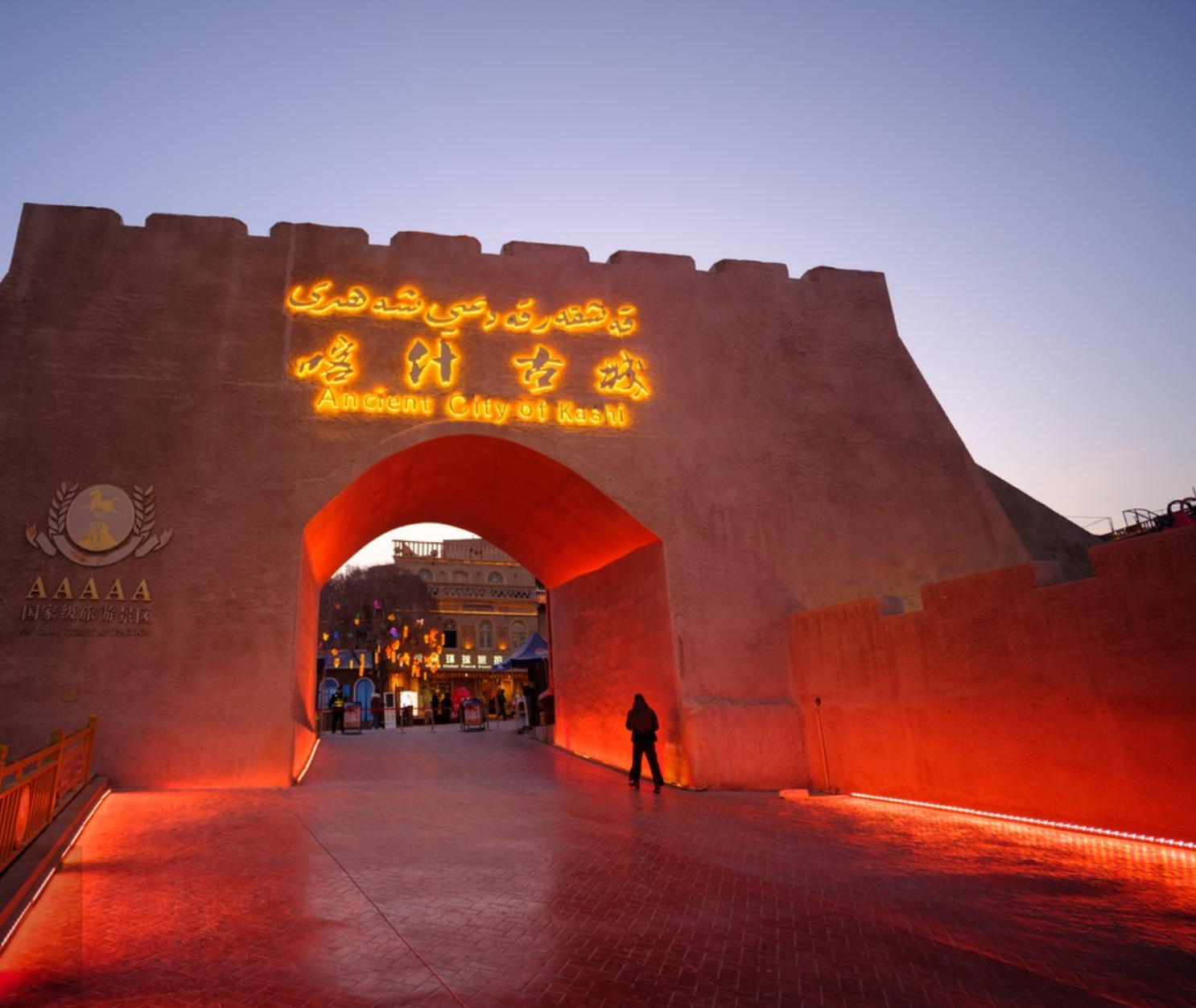
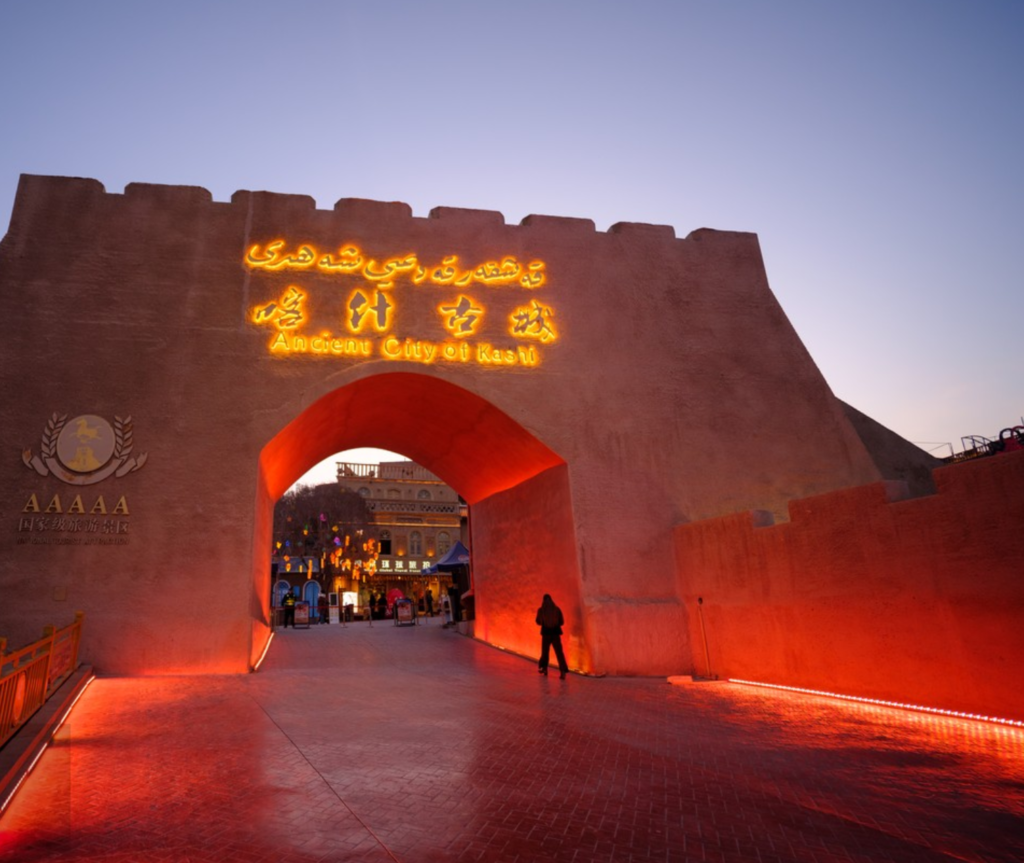
Gate-Opening Ceremony: Each morning, the East Gate hosts a lively ‘Gate-Opening Ceremony.’ Brief, ethnically distinctive song and dance performances provide a joyful prelude to exploring the ancient city.
Unmissable Bazaar and Culinary Delights
Emerging from the labyrinthine alleys leads you to the ancient city’s ‘living room’—the Kashgar Central Asia International Trade Market (commonly known as the ‘East Bazaar’), a feast for the senses. Both within and beyond the old city walls lies a culinary paradise: the aroma of freshly baked samsa fills the air, traditional naan breads are baked everywhere using ancient techniques, and a bowl of succulent gongzi rou or a generous portion of pilaf offer the most authentic flavours of Xinjiang.
Travel Tips
Best Time to Visit: Early morning or evening offer the softest light and most atmospheric experience. Allow at least a full day, embracing a sense of adventure as you explore.
Transport: Kashgar Airport and Railway Station connect to destinations nationwide. The Old Town is exclusively pedestrianised.
Season: Spring and autumn (April-May, September-October) offer the most pleasant climate.
Cultural Respect: Photograph residents and artisans with courtesy. Observe proper etiquette and dress modestly when entering mosques.
In essence, Kashgar Old Town is a city best measured by foot and perceived with the heart. It offers no standardised tourist experience, yet rewards travellers with the most authentic glimpses of daily life, the thickest layers of historical dust, and the purest cultural immersion. Here, every step is a dialogue with the Silk Road of a thousand years past.