Xinjiang Cuisine Guide
Xinjiang cuisine flows like a cultural river, gathering the essence of Eastern and Western culinary traditions. From the rustic grilled meats of nomadic peoples to the delicate pastries of agricultural cultures, each dish narrates the tale of centuries-old ethnic harmony and coexistence within these lands.
Xinjiang, this vast expanse covering one-sixth of China’s territory, is not only a treasure trove of natural landscapes but also a paradise for food enthusiasts. As the pivotal hub of the Silk Road, Xinjiang cuisine has absorbed culinary techniques from both East and West, forging a uniquely distinctive gastronomic tradition. When you set foot upon this land, you savour not merely food, but millennia of cultural heritage—each mouthful of pilaf carries the fragrance of the Silk Road, while every skewer of grilled meat narrates tales of the steppes.
I. Staple Foods and Flatbreads: The Cornerstone of Xinjiang’s Culinary Culture
1. Naan: Xinjiang’s King of Bread
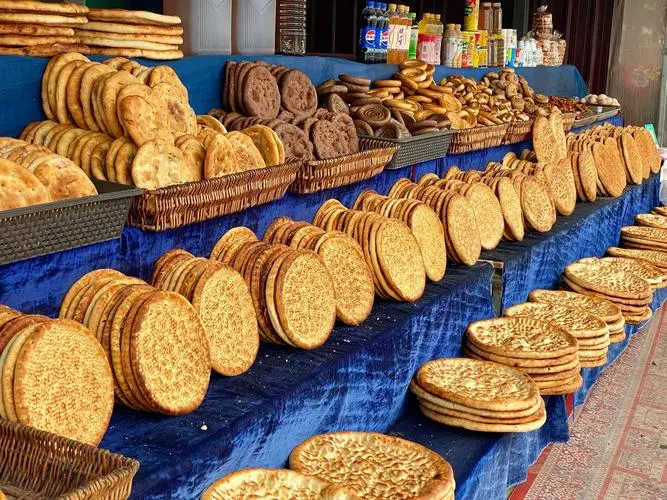
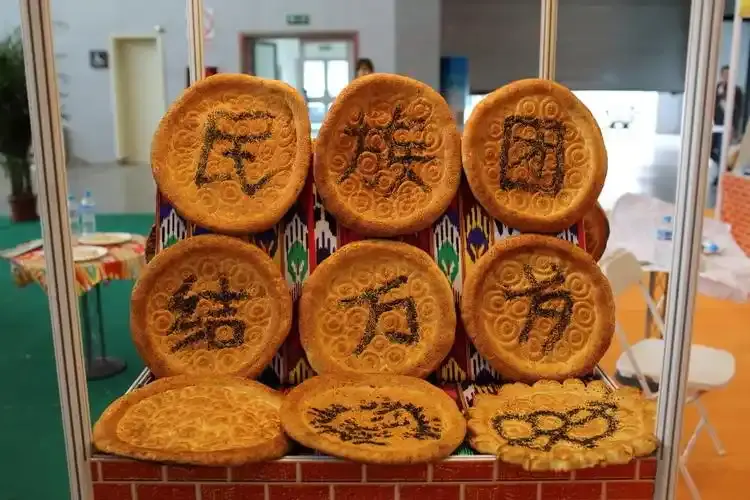
Naan is an indispensable staple in the daily lives of Xinjiang’s ethnic groups, boasting a history spanning over two millennia. Historically known as ‘Hu Bing’ or ‘Lu Bing,’ it is a round flatbread baked in a traditional oven.
The largest variety is the ‘Aimake’ (slice naan), measuring a substantial 40-50 centimetres in diameter; The smallest is the ‘tokachi’ (oil-baked naan), meticulously crafted; the thickest is the ‘geld’ (hollow naan), approximately 5-6 centimetres thick. Varieties include meat-filled naan, oil-baked naan, hollow naan, sesame naan, and over fifty others.
With low moisture content, a dry exterior, and a crisp interior, it keeps well for extended periods and is easily portable. These qualities made naan the ideal dry ration for merchants and travellers along the ancient Silk Road. A local folk saying captures naan’s significance in Xinjiang cuisine: ‘A day without naan leaves the heart uneasy; two days without naan leaves the legs like sieve dust.’
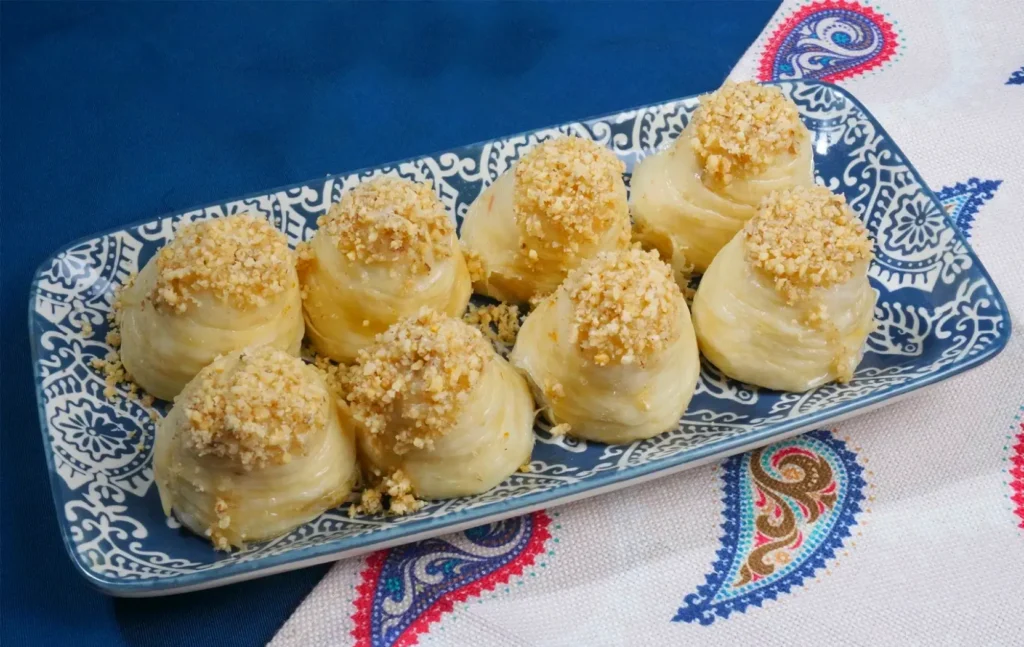
2. Youtazi: Layered pastry with distinct strata
Youtazi is a beloved Uyghur pastry, characterised by its snow-white, glossy appearance, finely layered texture, and rich yet non-greasy flavour. Its preparation demands meticulous care: dough is kneaded with warm water and yeast, left to rise for approximately one hour, then rolled thinly on a board, stretched, brushed with mutton tail fat, and steamed in bamboo baskets.
II. Meat Delicacies: The Essence of Nomadic Culture
1. Whole Roast Lamb: The Highest Honour for Guests
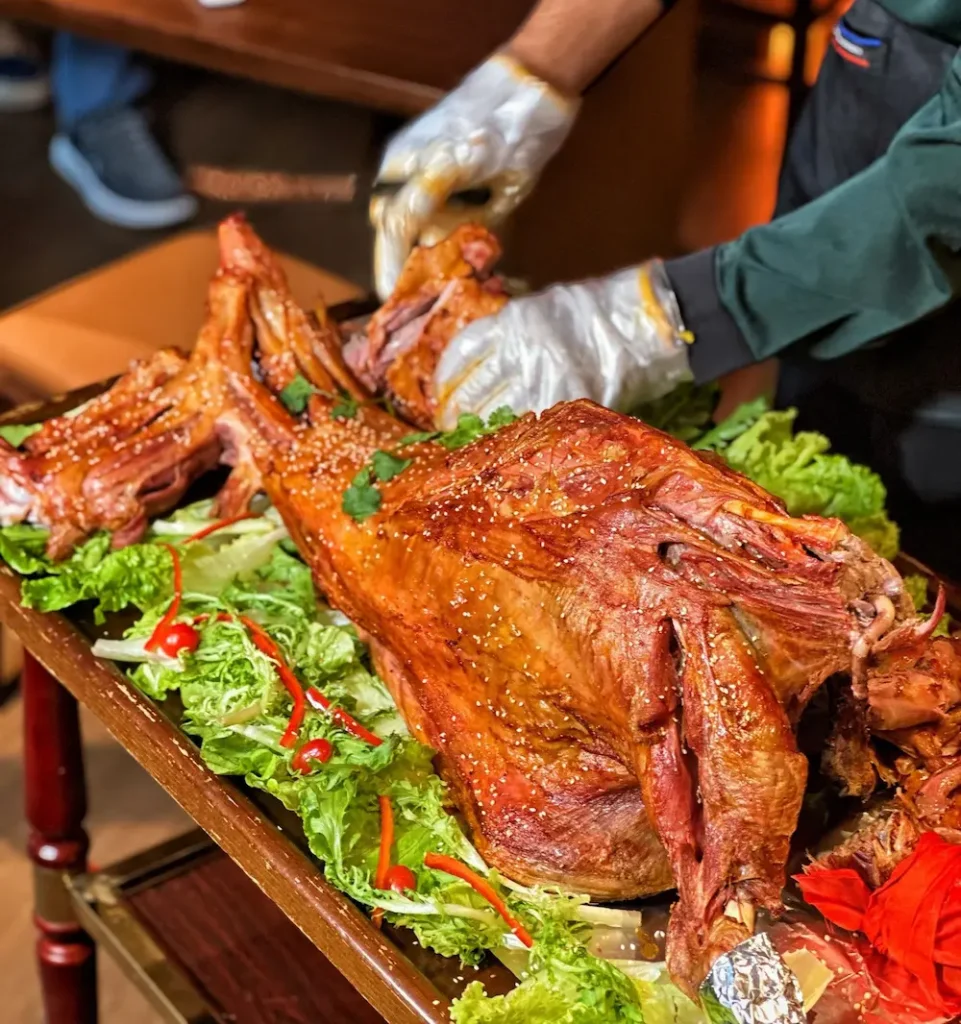
Whole roast lamb ranks among Xinjiang’s most prized dishes, its flavour rivalling that of Peking duck. Lambs under one year old are selected as the primary ingredient. After slaughter, the hooves and internal organs are removed. A paste made from fine flour, brine, eggs, turmeric, pepper, and cumin powder is evenly applied over the entire lamb. It is then placed in a specially designed tandoor oven and slow-roasted for approximately one hour.
Roast whole lamb ranks among Xinjiang’s most esteemed dishes, typically served to honoured guests. Upon completion, the lamb is adorned with a red bow tied around its head and a sprig of celery or coriander placed in its mouth, presenting an illusion of a living lamb reclining to graze.
2. Skewered Lamb: A Nationally Popular Street Food
Skewered lamb is Xinjiang’s most renowned snack, boasting a history of over 1,800 years. Prepared on specially designed grilling troughs, the skewers used measure 30 centimetres with a wooden handle at one end.
Authentic skewers are roasted on these specialised grills. During cooking, Uyghur chefs deftly turn the skewers with their left hand while expertly sprinkling seasonings—fine salt, chilli powder, and cumin—with their right. Ready in minutes, the skewers boast a deep golden-brown, glossy finish. Lean meat proves tender and fragrant, while fatty cuts develop a crisp, caramelised exterior.
3. Hand-Gripped Lamb: Rustic Primitive Flavour
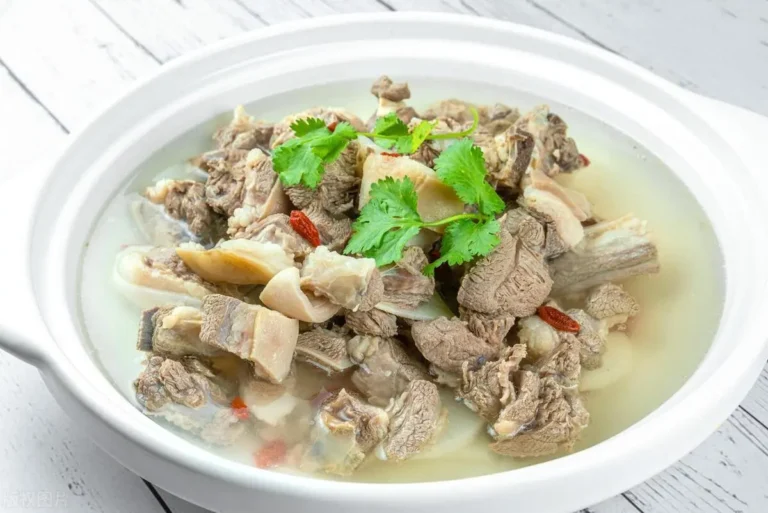
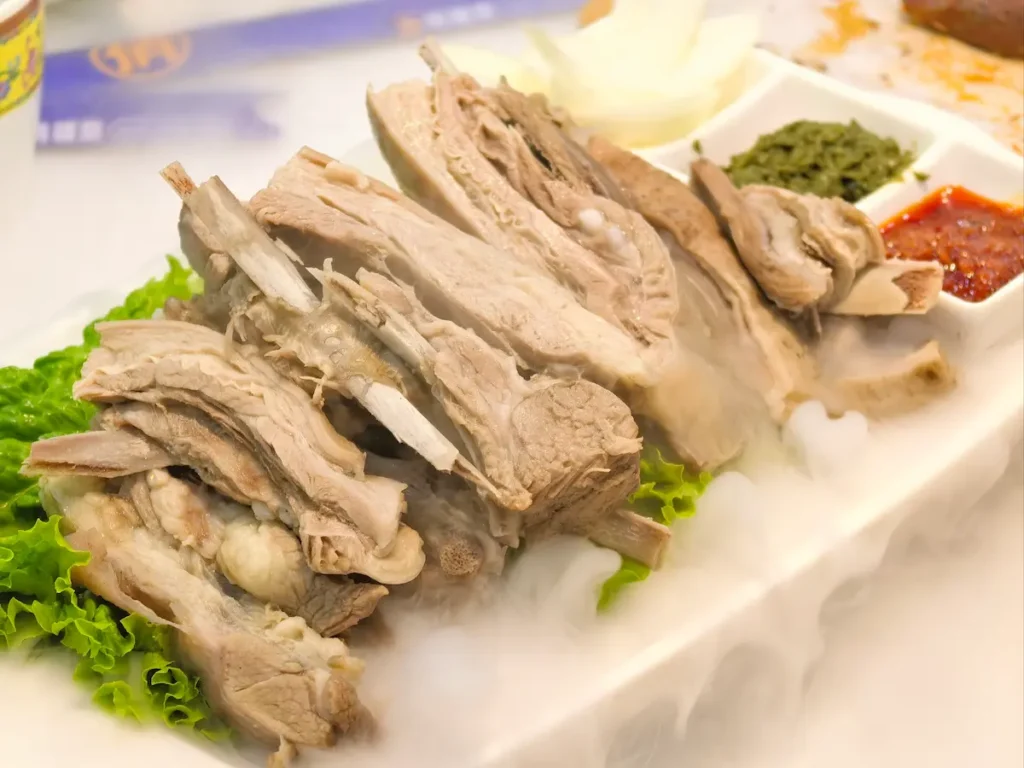
Hand-gripped lamb, named for being eaten with bare hands after boiling in clear water, is a staple meat dish among the Kazakh, Uyghur, and Kyrgyz peoples. This ancient, distinctive, and primal method of consumption allows one to fully savour the rich, succulent flavour filling the mouth.
Perhaps the most fragrant way to savour mutton is through these large chunks of tender meat, boiled in clear water with a pinch of salt. It eschews soy sauce and rejects cumin, safeguarding its pure essence. When enjoying hand-pulled mutton, it is typically accompanied by a dish of onions, a dish of salt, and roasted naan bread, along with hot brick tea.
III. Noodles and Snacks: A Multicultural Fusion
1. Pilaf: A Festival Symbol
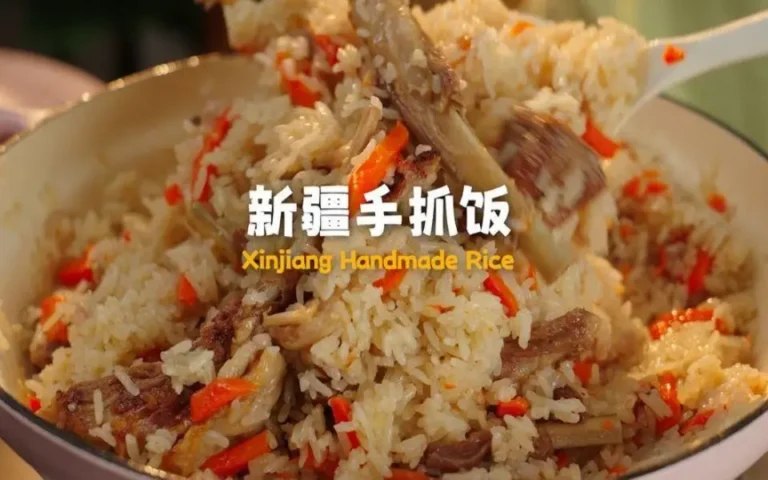
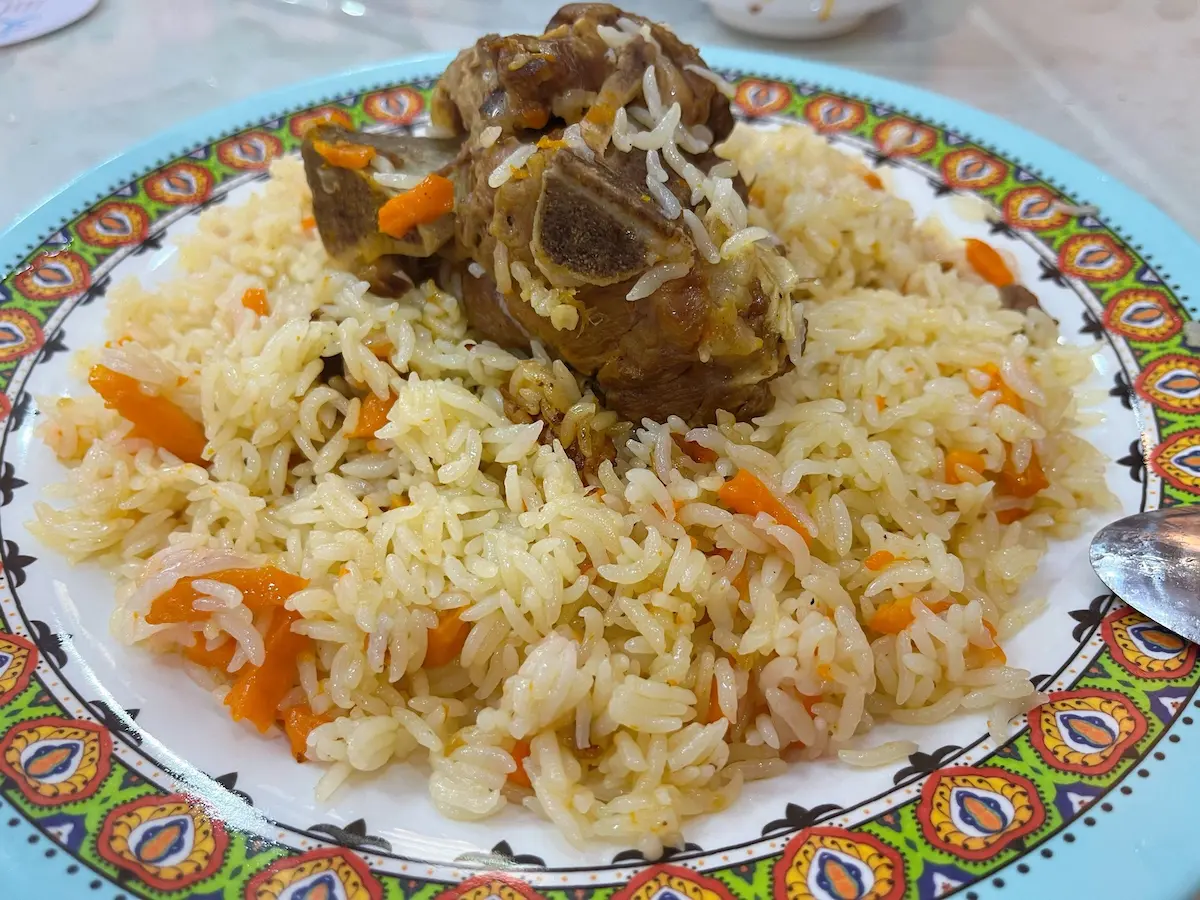
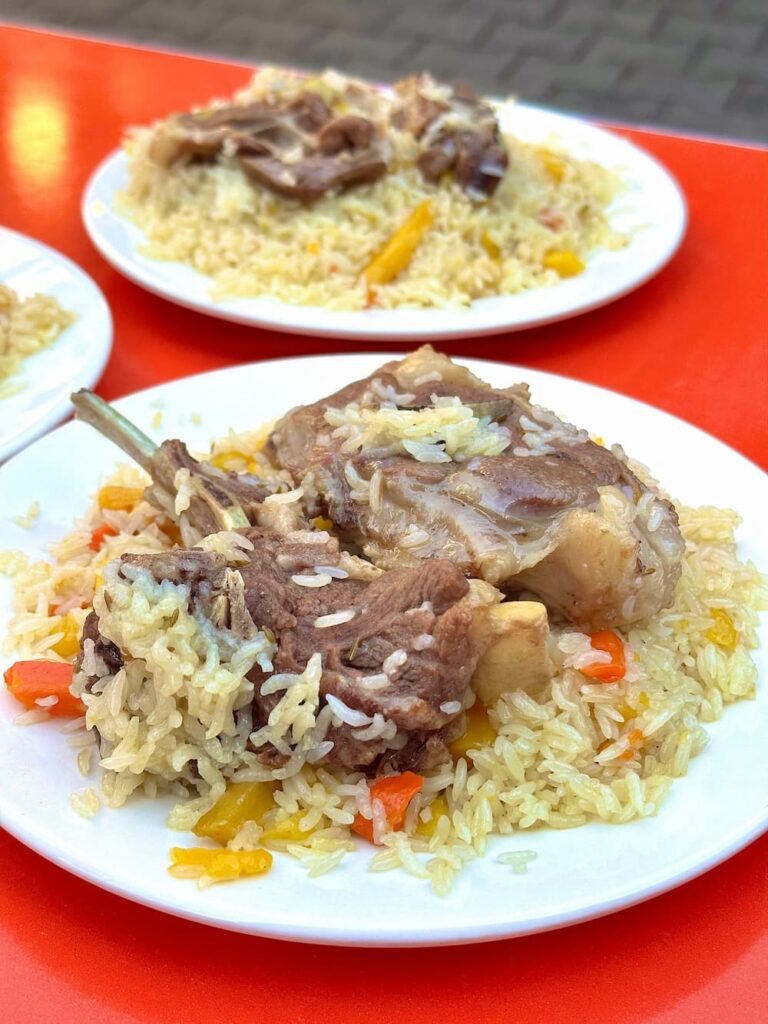
Pilaf ranks among the most cherished dishes of Xinjiang’s diverse peoples. Known as ‘polo’ in Uyghur—a term of Persian origin—it denotes rice stewed with mutton or beef, carrots, and vegetable oil. Historical records trace its origins to the Northern Song Dynasty (960–1127 AD), emerging as a fusion of nomadic and agricultural culinary traditions.
Pilaf is categorised by flavour into sweet and savoury varieties. Sweet pilaf is predominantly vegetarian, featuring rice, eggs, carrots, raisins, dried apricots, peanuts, and vegetable oil. Savoury pilaf is typically meat-based, comprising rice, beef or lamb, carrots, and onions.
2. Hand-pulled noodles: An embodiment of artisanal skill
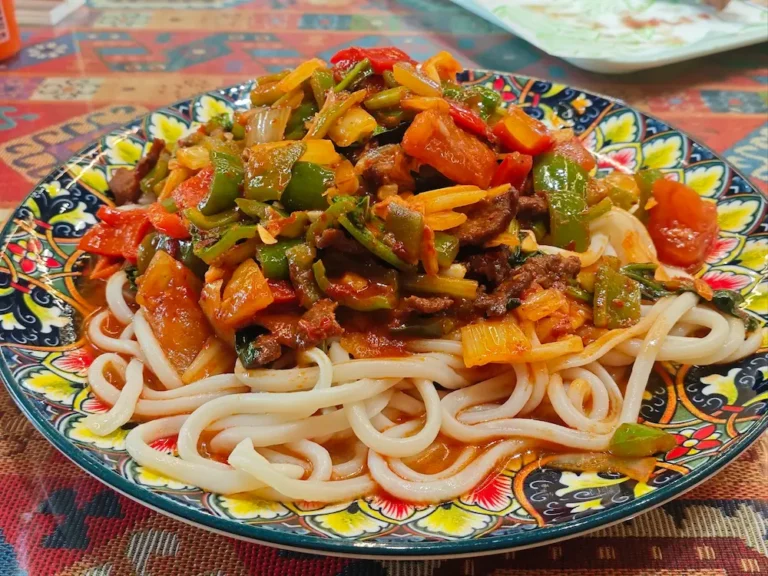
Hand-pulled noodles are a type of dough product crafted directly by hand without rolling or pressing. Mastering two key points is essential: firstly, the salt content in the water used for kneading must be just right—too little causes breakage, too much prevents proper stretching; secondly, the dough must be properly rested, ideally achieving a soft yet resilient texture.
A highly skilled chef can stretch a single batch of dough into over ten kilograms of noodles, with the total length reaching several kilometres. Lātiáozi is widely available in Xinjiang’s restaurants and eateries, commonly featured in stir-fried or tossed noodle dishes.
3. Baked Buns and Thin-Skinned Buns
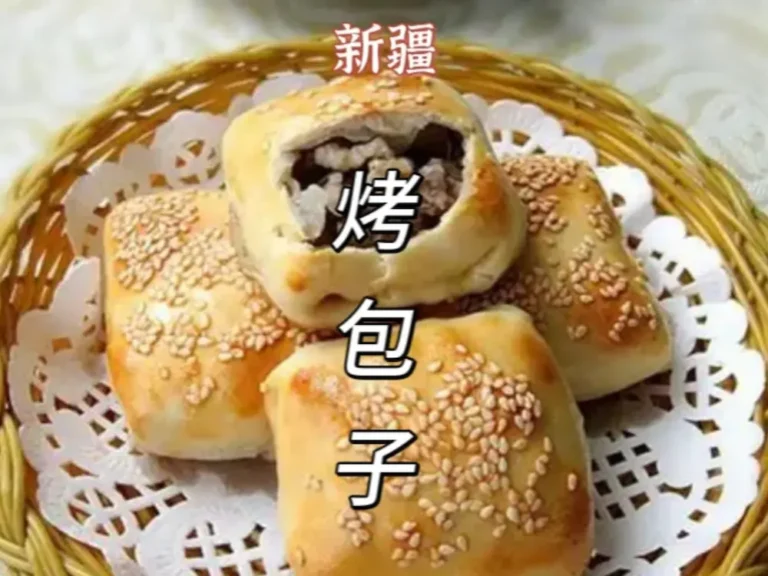
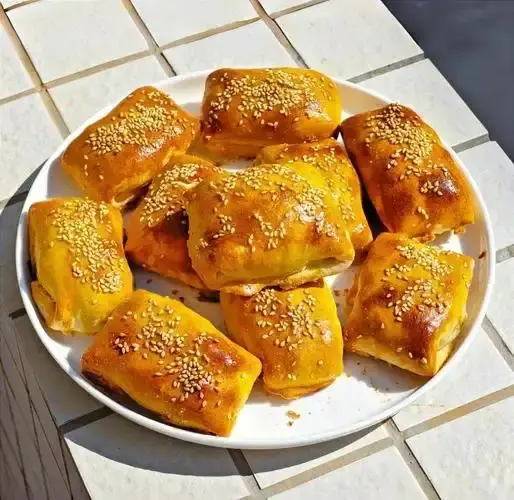
Baked buns (known as ‘shamusa’ in Uyghur) are a cherished traditional Uyghur delicacy, served during festivals and to welcome guests. They are ubiquitous in restaurants and food stalls across Xinjiang’s urban and rural bazaars.
Thin-skinned buns share similar ingredients with roasted buns, but their wrappers are rolled exceptionally thin. When steamed, the filling becomes nearly visible through the delicate skin. Characterised by their thin crust, tender meat, and rich fat content, eating them feels as though the bun’s skin melts away amidst the succulent meat and aromatic fat.
4. Flour-stuffed Lamb Lungs and Rice-stuffed Lamb Intestines: A Fusion of Ingenuity and Craftsmanship
Preparing rice-stuffed intestines and flour-stuffed lungs demands meticulous extraction of intact lamb offal. Lamb liver, heart, and a small amount of suet are finely diced. This mixture is blended with pepper, cumin powder, salt, and washed rice to form the filling, which is then stuffed into lamb intestines.
White flour is washed into a paste, combined with vegetable oil and egg, then injected into the sheep’s lungs. The rice-stuffed intestines, flour-stuffed lungs, cleaned sheep’s stomach, and gluten rolls (tied with string and dusted with chilli powder) are boiled until cooked. The result is glutinous, fresh intestines; tender, soft lungs; and sheep’s stomach and gluten with a satisfying chew – all fragrant, delicious, and uniquely flavoured.
IV. Signature Beverages and Snacks: The Perfect Culinary Complements
1. Milk Tea: The Warmth of the Steppes
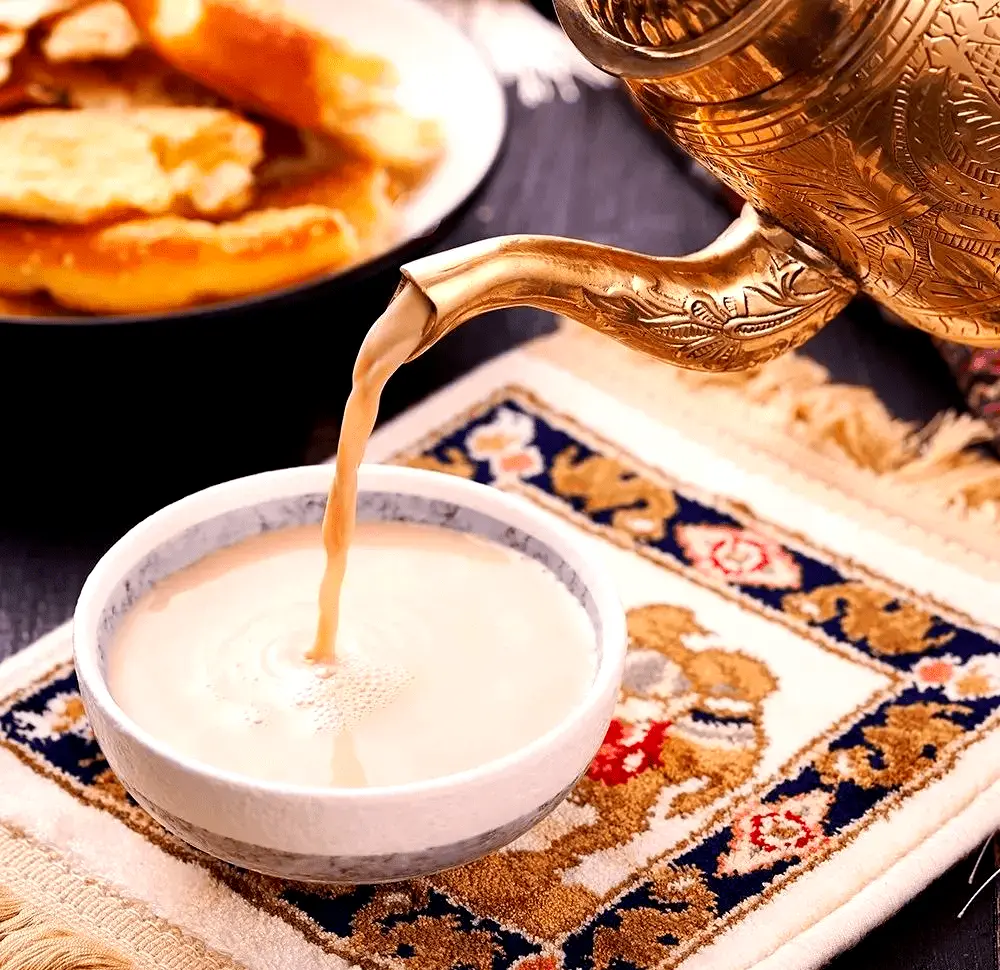
Xinjiang’s milk tea differs from that found in inland regions, being brewed from brick tea and milk with added salt. This savoury, aromatic brew is an essential daily beverage for herders, quenching thirst while replenishing energy expended in the frigid climate.
In Northern Xinjiang, the Uyghur people particularly favour milk tea. Among dairy products, they especially enjoy yoghurt, often eating it with naan bread during summer.
2. Yoghurt and Yoghurt Lumps: The Wisdom of Nomadic Preservation
Yoghurt curds represent a traditional dairy product among Xinjiang’s ethnic minorities. Fermented yoghurt is placed in barrels and repeatedly pounded and dried until all moisture is removed, preserving its fats, proteins, and other nutrients.
This foodstuff proved exceptionally suited to nomadic life, being both portable and durable. It emerged as a result of Xinjiang’s people adapting to nature and transforming their way of life. During busy farming seasons, villagers would often carry yoghurt and naan bread as their lunch.
V. Regional Specialities and Fusion Cuisine
1. Grand Platter Chicken: A Model of Fusion Innovation
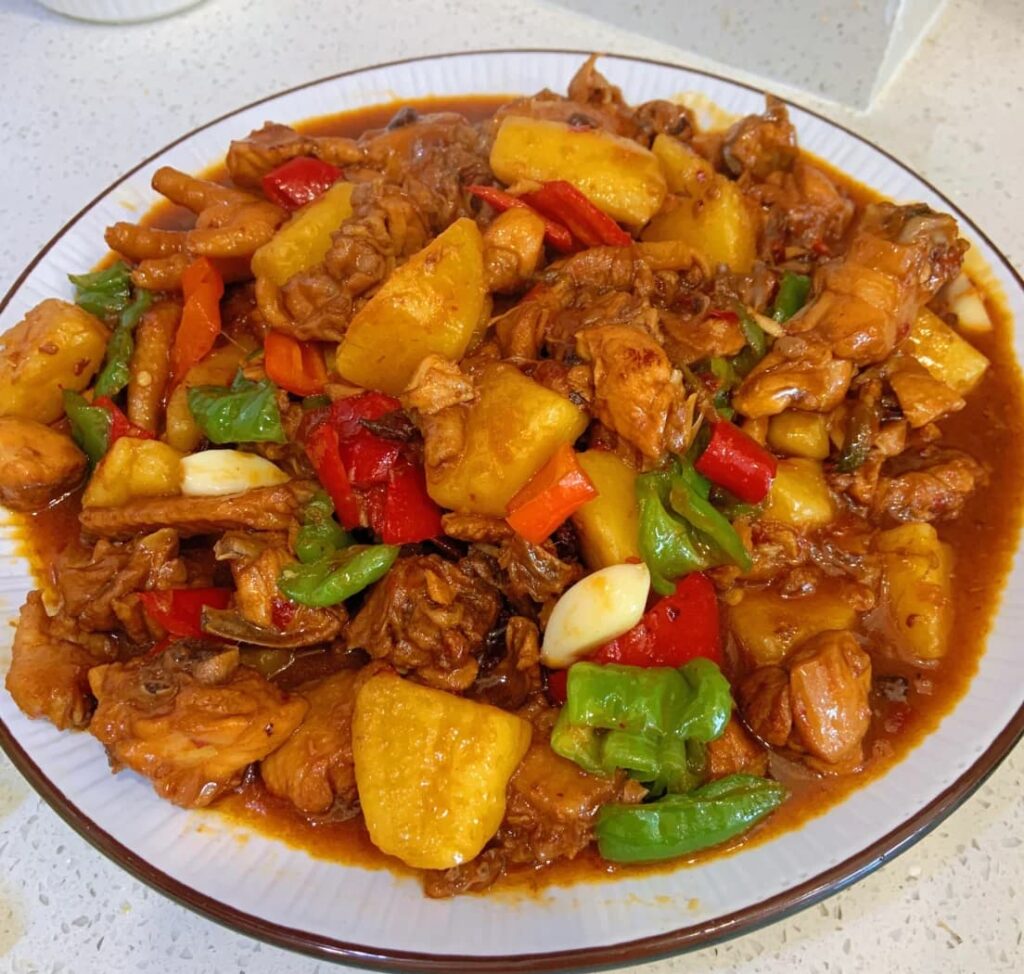
Xinjiang Grand Platter Chicken represents a modern variant of halal cuisine designed for communal dining, named for its presentation of chicken chunks served on a large platter. Popular in Xinjiang for nearly a decade, it stands as one of the region’s signature dishes.
The emergence of Grand Platter Chicken is linked to National Highway 312, which traverses China from Shanghai to Ili. In the late 1980s, lorry drivers traversing this route frequently stopped at Shawan County—some 180 kilometres from Ürümqi—where they arrived just in time for a meal.
Combining Xinjiang’s signature ingredients from both basins—potatoes and dried chillies—while catering to diverse tastes, this dish swiftly captured the palates of travellers.
2. Xinjiang Fried Rice Noodles: A Symbol of Cultural Fusion
Xinjiang Fried Rice Noodles originated in the 1980s within the canteen of Urumqi’s October Tractor Factory. A couple from Guizhou, longing for their homeland’s flavours, stir-fried rice noodles they had brought from Guizhou with local Xinjiang chillies.
This dish swiftly spread across Xinjiang before gaining nationwide popularity. It epitomises Xinjiang cuisine’s inclusive nature, embodying the fusion of culinary traditions from diverse ethnic groups.
VI. Practical Guide to Xinjiang Cuisine
1. How to Savour Xinjiang Delicacies
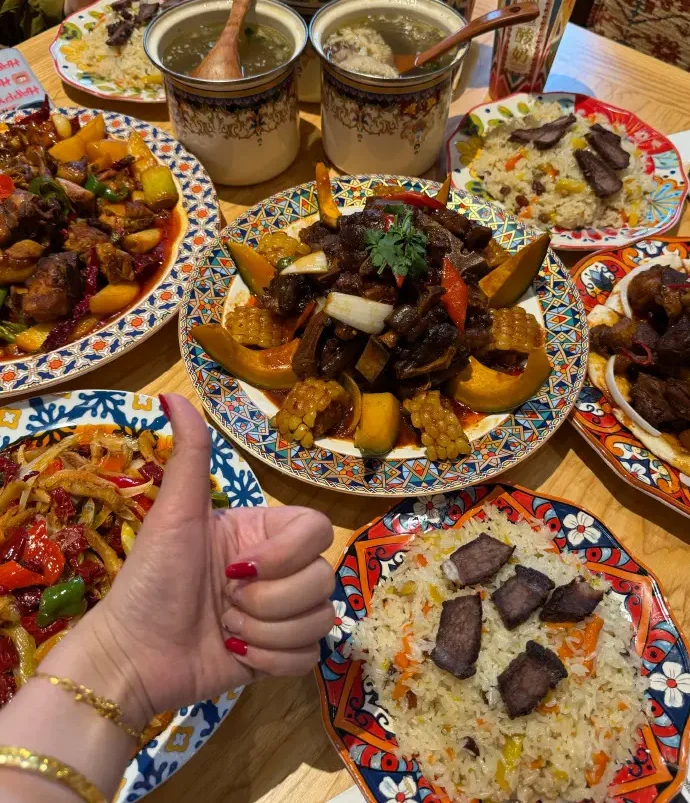
The finest way to savour grilled lamb skewers is to eat them piping hot, accompanied by a cup of brick tea to cut through the richness. The traditional method for eating pilaf is with your hands, though chopsticks or spoons are now more commonly used. Nan bread pairs well with milk tea or stewed dishes; break it into small pieces and soak them in the broth for a uniquely flavourful experience.
2. Dining Etiquette and Taboos
With Xinjiang’s large Muslim population, strict halal dietary requirements apply. Visitors should avoid bringing non-halal food into halal restaurants; refrain from mentioning forbidden foods in the presence of Muslims; and observe local customs before dining.
3. Optimal Seasons and Venues for Tasting
Xinjiang cuisine is enjoyable year-round, though summer and autumn offer particular abundance. Summer brings fresh fruits and dairy products, while autumn is prime season for grilled meats and pilaf.
Night Markets and Bazaar: Kashgar’s Khan Bazaar and Urumqi’s International Grand Bazaar are prime spots for sampling street food.
Established Restaurants: Seek out small eateries frequented by locals for the most authentic flavours.
Farmhouse Dining: Experience the most genuine rural cuisine amidst the Ili grasslands or Turpan’s Grape Valley.
Wander through Xinjiang, letting its cuisine be your guide. Here, every sensation on your palate becomes a dialogue with history. From street snacks to grand banquets, embrace these flavours boldly. Exchange tales of their origins with locals for an unforgettable journey. We invite you to experience Xinjiang firsthand, savouring millennia-old delicacies and discovering the culinary charm along the Silk Road.