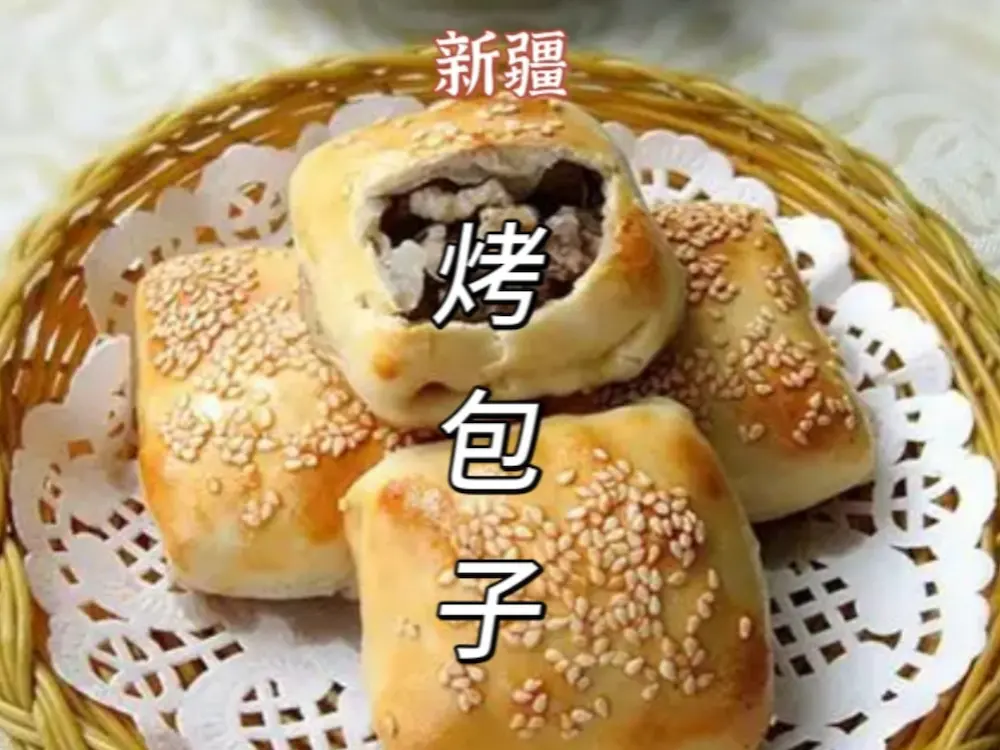
Xinjiang Roasted Buns
Golden and crispy on the outside, fragrant lamb filling on the inside—take a bite and you can almost hear the jingling of camel bells along the Silk Road. This is Xinjiang roasted buns, a culinary delight that transports your taste buds through time and space.
In Xinjiang, roasted buns (known as ‘shamusa’ in Uyghur) are not merely a foodstuff but a living fossil of millennia-old culinary traditions. This time-honoured delicacy traces its origins to the Silk Road era, when caravans required portable, long-lasting provisions. Xinjiang roasted buns emerged as the ideal choice through their distinctive preparation methods. Today, they stand as an indispensable element of Xinjiang’s gastronomic heritage, a must-try flavour for travellers seeking authentic local experiences.
I. The History and Cultural Heritage of Xinjiang Roast Buns
The history of Xinjiang roasted buns traces back to the Silk Road era of the 2nd century BC. In the Uyghur language, these buns are known as ‘samsa’, meaning ‘delicious roast’. This method of wrapping lamb in dough and preserving it in a tandoor oven originated as a durable, energy-rich choice for Silk Road caravans, later evolving into a staple culinary practice among Xinjiang’s diverse ethnic groups.
The Qing dynasty’s Xinjiang Atlas explicitly records: ‘The Western Regions’ Hui people excel at making roasted buns, with many market stalls featuring tandoor ovens for baking and selling them.’ This attests to its longstanding tradition. Xinjiang roasted buns were listed as a China Gold Medal Tourist Snack and included in Xinjiang’s Intangible Cultural Heritage Register in 2016, cementing their significant place within Chinese culinary culture.
At Xinjiang’s bazaars and breakfast stalls, roasted buns are an indispensable delicacy. A local proverb aptly captures this affection: ‘Go three days without roasted buns, and your body will start to shiver.’ For visitors, savouring these buns offers not only a culinary delight but also an exceptional way to experience Xinjiang’s culture.
II. Recommended Speciality Roast Bun Shops Across Xinjiang
1. Hotan Region: The Most Authentic Traditional Flavour
Yulongkashi Famous Roasted Buns Shop stands as Hotan Prefecture’s most celebrated establishment for this delicacy. Situated in Yulongkashi Town (though bearing ‘Kashi’ in its name, it bears no relation to Kashgar City, lying approximately 10 kilometres from Hotan’s urban centre), this shop preserves the most traditional round shape for its roasted buns. Each bun is palm-sized, featuring a thick, leavened dough crust imbued with a distinct milky aroma.
Two primary fillings are offered: lamb and colourful vegetable. The latter contains meat alongside tomatoes and green peppers for enhanced texture. The top crust is crispy enough to crack open by hand, while the base remains exceptionally hard, studded with coarse salt granules for flavour enhancement—locals typically discard this bottom layer.
Practical Information:
- Address: Renowned roasted bun shop on Yulongkashi Ancient Street, Hotan
- Speciality: Traditional round roasted buns with thick crust and generous filling
- Price: Approximately 5 yuan per bun
- Recommendation: Avoid the midday rush; freshly baked buns sell out immediately
2. Kashgar Old Town: Centuries-Old Flavours
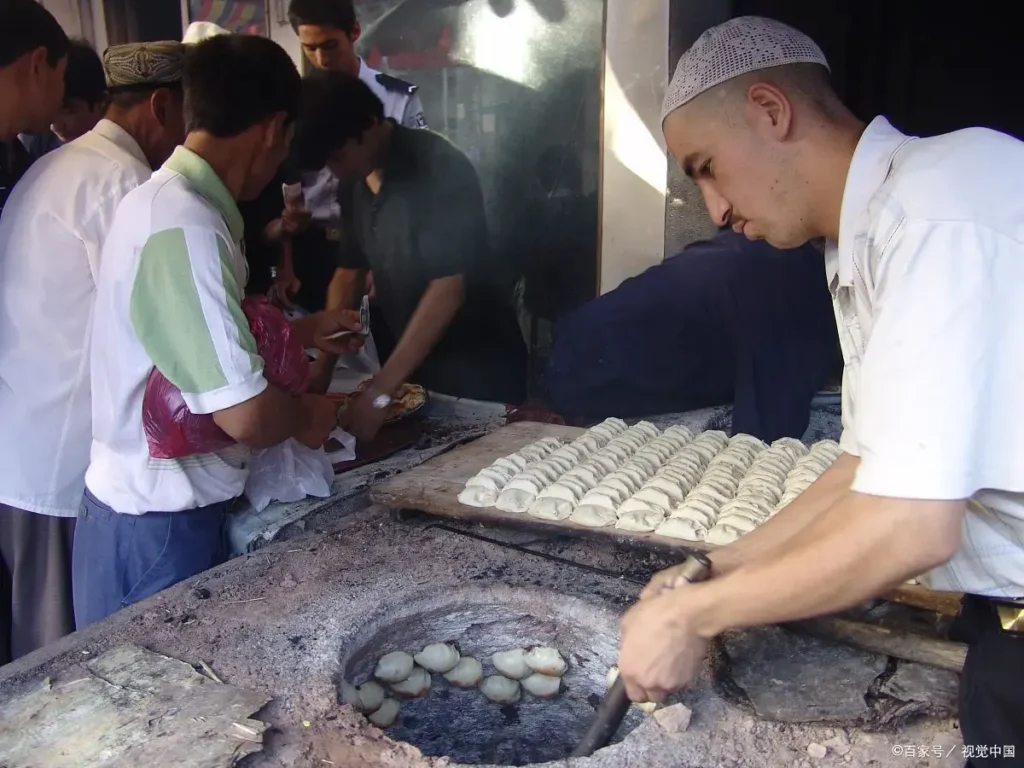
Kashgar’s roasted buns are celebrated for their crisp exterior, tender interior, and savoury-salty aroma. Aizimaiti Roasted Bun Shop, situated opposite a century-old teahouse, offers an unmissable street snack. Here, each bun costs merely 2 yuan, representing exceptional value.
Beyond traditional roasted buns, Kashgar offers the distinctive ‘Yaba Zha’ variety. Hand-shaped and significantly smaller than square buns, these irregularly formed treats are tightly packed, concentrating the meat filling’s flavour into an intensely aromatic bite. Devoured in just a few mouthfuls, they deliver an addictive, snack-like deliciousness.
Kashgar’s Ancient Family-Run Roast Bun Shop offers two varieties: round roast buns filled with meat at five yuan each; and square roast buns filled with vegetables at two yuan each (though not purely vegetable-filled, these contain lamb mince mixed with tomatoes and green peppers, also known as colourful roast buns).
Practical Information:
Recommended Shops: Aizimaiti Roasted Bun Shop, Ancient Family-Traditional Roasted Bun Shop
Specialities: Traditional square roasted buns, Yibazhua, Colourful roasted buns
Price: 2-5 yuan per bun
Best Tasting Time: When the first batch of roasted buns emerges from the oven at dawn
3. Ürümqi: Traditional Flavours in a Modern Metropolis
As Xinjiang’s capital, Ürümqi gathers renowned roasted bun masters from across the region. ‘Kashgar One-Handed Grab’ on Hotan 2nd Street, Shayibak District, is a viral hotspot. Small buns cost 3 yuan each, roasted naan 10 yuan each, with lamb buns lacking any gamey flavour.
‘Pomegranate Blossom’ Located on the second floor of Hongfu Hotel, 160 Wuyi Road, Shayibak District, this shop is renowned for its flaky-crusted roasted buns. Best enjoyed piping hot, they offer a crispy, succulent texture without any gamey lamb flavour.
‘Caesar Baked Buns’ Situated at 46 North Fifth Alley, Shuimogou District, these freshly baked buns boast a delightfully crispy crust. The filling consists primarily of lean meat, offering a satisfyingly hearty bite. Priced at 4 yuan each, they remain pleasantly light even when enjoyed in larger quantities.
Practical Information:
Recommended Establishments: Kashgar One-Stop, Pomegranate Blossom, Caesar Baked Buns
Specialities: Flaky-crust baked buns, lean-meat-filled baked buns
Price Range: ¥3–5 per bun
Ambience: Compared to regional outlets, Urumqi’s baked bun establishments offer superior surroundings
Below is a comparison of baked bun shops across Xinjiang’s major cities:
| City | Recommended Shops | Distinctive features | Reference price | Suitable for |
|---|---|---|---|---|
| Hotan | Yulongkashi’s renowned roasted bun shop | Traditional round shape, thick pastry with generous filling | 5 yuan each | Visitors who favour traditional flavours |
| Kashgar | Aizimaiti’s Baked Buns Shop | Crispy on the outside, tender on the inside; excellent value for money | 2-5yuan each | Budget constraints, yet seeking authentic flavours |
| Ürümqi | The pomegranates have ripened. | Crispy-skinned baked buns, pleasant surroundings | mid-range | Visitors who place importance on the dining environment |
| Luntai | Oil City Restaurant | Served with spicy mutton shank | 7yuan each | Visitors wishing to experience distinctive pairings |
4. Other Regional Speciality Roast Baozi Shops
At Luntai Oil City Restaurant, roast baozi cost 7 yuan each. Their crusts are golden-brown and crisp, with generously sized buns filled with lamb, onion and green pepper for a richer flavour profile. Here, roast baozi aren’t fast-food items for breakfast joints but signature dishes or staples at exclusive eateries. Pairing one with the restaurant’s special spicy lamb trotters is the authentic Luntai way for seasoned diners.
Keximakela Baked Buns in Turpan, situated opposite the Turpan Museum, is a CCTV-featured internet sensation, priced one yuan higher than competitors. Their beef cumin-stuffed buns offer a distinct flavour profile from traditional mutton-stuffed varieties, featuring thin crusts and abundant juices. Priced at three yuan each, they also offer postal delivery.
III. Varieties and Characteristics of Baked Baozi
1. Classification by Shape
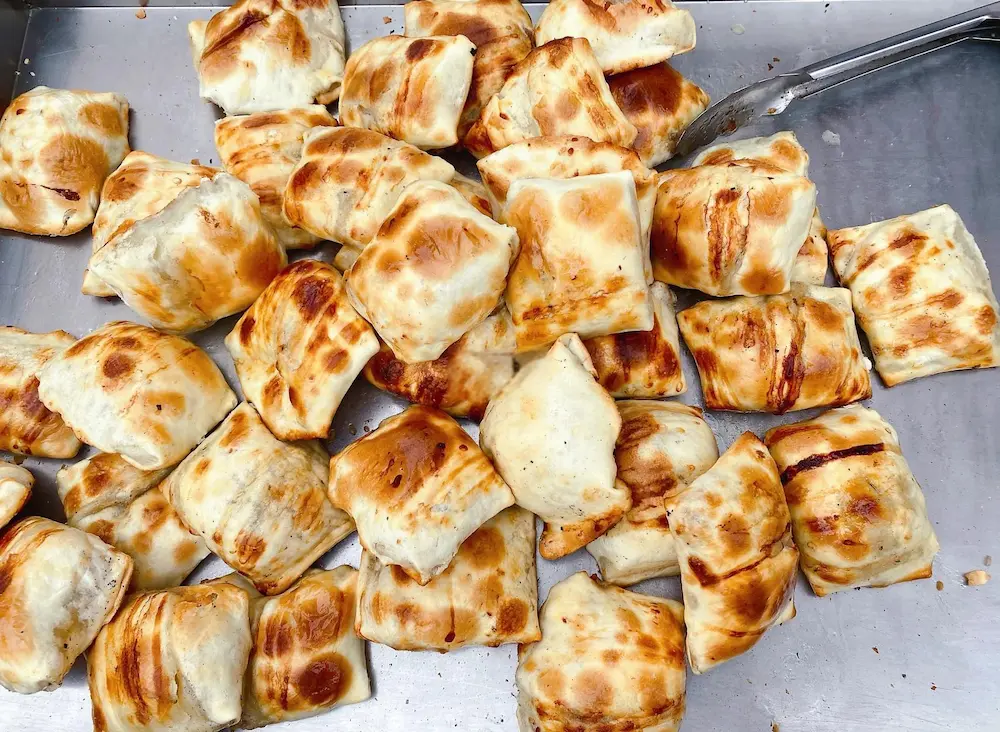
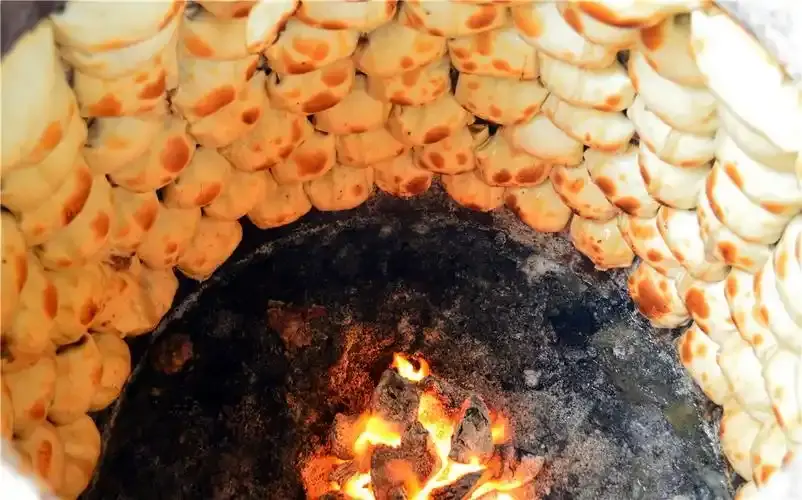
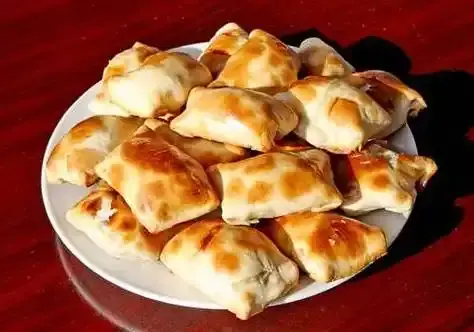
Square baked baozi are the most common type, folded into a square shape at the corners and primarily baked in tandoor ovens. This shape allows them to adhere to the oven walls for even heating.
Round baked buns, representative of the Hotan region, retain the traditional bun shape with a thicker dough covering, roughly the size of a palm.
‘One-Handed Buns’ are a Kashgar speciality. These compact buns are shaped by hand, resulting in an irregular form. Their tighter wrapping concentrates the flavour of the meat filling, making it more intense and robust.
2. By Filling Type
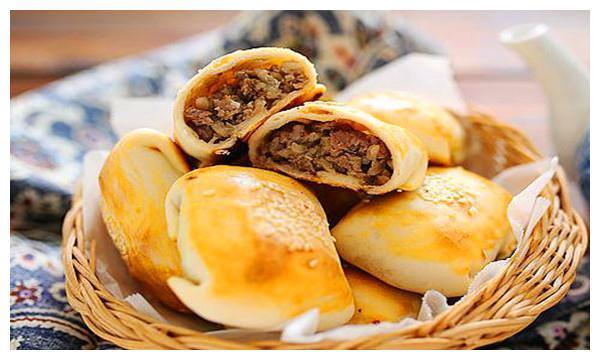
Classic lamb roasted buns represent the most traditional flavour, featuring fresh lamb and onions seasoned with cumin, black pepper and other spices. The marbled lamb fat renders into the onions during baking, releasing a rich, aromatic fragrance.
Beef roasted buns, typical of the Turpan region, substitute lamb with beef. The meat is firmer and offers a robust, deep flavour.
Vegetarian roasted buns feature fillings of pumpkin, carrot, potato and other vegetables, catering to those who abstain from meat. Seasoned to perfection, the vegetables offer a refreshingly sweet and distinct flavour profile.
Some establishments introduce innovative combinations for mixed-filling roasted buns, such as lamb with chickpeas or lamb with mushrooms. Colourful roasted buns enhance the lamb filling with tomatoes and green peppers, delivering a more complex and layered taste experience.
IV. The Proper Way to Savour Roasted Baozi
1. Optimal Timing for Consumption
Breakfast hour presents the finest opportunity to savour roasted baozi. Xinjiang locals traditionally enjoy them as morning fare, paired with milk tea or brick tea, to kickstart an energetic day. The first batch from the morning oven proves particularly exquisite, boasting a crispy exterior and tender, succulent filling.
They also make an excellent afternoon tea accompaniment, served with a pot of Uyghur medicinal tea to cut through richness while savouring a leisurely interlude.
2. Eating Techniques
Freshly baked roasted buns have extremely hot crusts; avoid taking large bites directly to prevent burns. The traditional method involves first cracking open the bun with your hands or a tool to allow the steam to escape before eating.
For the large, round roasted buns from Hotan region, locals typically only consume the top portion. The base crust is notably tough and contains coarse salt granules (primarily used to enhance aroma and flavour).
3. Recommended Pairings
Salted milk tea is the quintessential accompaniment to roasted buns, cutting through richness while enhancing flavour. Xinjiang’s salted milk tea, brewed from brick tea and milk with added salt, complements roasted buns perfectly.
Brick tea or medicinal tea also make excellent choices, particularly when enjoying roasted buns in the afternoon, as the herbal components aid digestion.
Yoghurt or pomegranate juice effectively counteracts the greasiness of roasted buns, offering a refreshing palate cleanser.
V. Unravelling the Craft of Roasted Buns
The preparation of roasted buns is a traditional craft, with each step requiring particular attention. Following local tradition, the dough must undergo ‘three rest periods and three kneadings’. During resting, the dough is covered with a woolen felt blanket to retain warmth. It is only considered sufficiently resilient when it can be draped over the wrist without sagging.
The filling is the soul of the roasted bun, requiring leg meat from sheep reared that very year. It must be diced, not minced, to retain its satisfying texture. Onions must be thoroughly squeezed dry, seasoned only with freshly ground cumin, a pinch of salt, and pepper – ‘any more would overpower the lamb’s freshness.’ Finally, a spoonful of lamb tail fat is drizzled over the top. ‘At high temperatures, it melts into a rich sauce, bursting with flavour when you bite into it.’
Sticking the buns to the tandoor pit demands true skill: the pit walls must reach 200°C. Once hot enough, wipe them with a damp cloth, then lightly brush the underside of each bun with water—‘this ensures they stick.’ While baking, you must tend the pit opening, flipping each bun with an iron hook every five minutes—‘too fierce a flame scorches the crust, too gentle leaves the filling undercooked.’ After twelve minutes, the buns turn a tempting golden hue, with droplets of oil glistening within the wrinkled crust.
VI. Practical Tasting Guide
1. Tips for Choosing an Establishment
Observing customer footfall is a straightforward method for gauging the quality of a roasted bun shop. Establishments frequented by locals typically offer more authentic flavours. For instance, Korla’s most popular roasted bun shop—Nura Hong Egg Noodle Roasted Buns on Pear City Bazaar Food Street—produces around 200 buns per oven. They sell out immediately upon baking, and arriving late means waiting for the next batch.
Note operating hours, as many shops close by afternoon. For breakfast-style roasted buns, visit early.
2. Tasting Tips
Respect local customs: avoid carrying or consuming pork products in halal establishments. Xinjiang’s diverse ethnic communities observe Islamic dietary practices.
Eat in moderation. Though delicious, roasted buns are quite rich. First-time visitors to Xinjiang should avoid overindulgence and balance meat and vegetable dishes.
Spiciness warning: Xinjiang cuisine frequently uses chili powder (la pi zi). If you cannot tolerate heat, specify ‘no spice’ when ordering.
Wandering through the streets and alleys of Xinjiang, the aroma of Xinjiang roasted buns is ever-present. This is not merely a foodstuff, but a symbol of Xinjiang hospitality. Whether you are a passing traveller or an immersive explorer, one bite of a piping hot roasted bun will immerse you in the warmth and cordiality of this land. May this guide to Xinjiang Roasted Buns assist you in discovering the most flavourful establishment during your travels through Xinjiang, satisfying both your palate and your spirit.