Kanas Scenic Area: Tickets, Routes, and Visitor Tips for 2026
Last updated: July 15, 2026 · Written by Karl Huang, a Xinjiang travel specialist who has spent time across the region. Practical details are cross-checked against official tourism, transport, and border-regulation sources.
Deep within the Altai Mountains of Xinjiang lies a hidden realm hailed as a ‘paradise on earth’. Here, the lake waters shift hues, legends speak of lake monsters, and Genghis Khan once rested his troops and horses.
Kanas Scenic Area lies in the northern part of Burqin County, Altay Prefecture, Xinjiang, situated within the golden belt bordering China, Kazakhstan, Russia, and Mongolia. This 10,030-square-kilometre expanse is Xinjiang’s most renowned tourist destination, hailed as the ‘God’s Back Garden’.
The Mongolian term ‘Kanas’ translates as ‘beautiful and mysterious lake’. This region harmoniously blends diverse natural landscapes—glaciers, snowfields, towering mountains, rivers, lakes, forests, and grasslands—while preserving the enigmatic culture of the Tuvan people. Next, a comprehensive guide to travelling in Kanas: let us embark together to explore this wondrous land.
I. Overview of Kanas: A Perfect Fusion of Nature and Culture
1. Basic Information
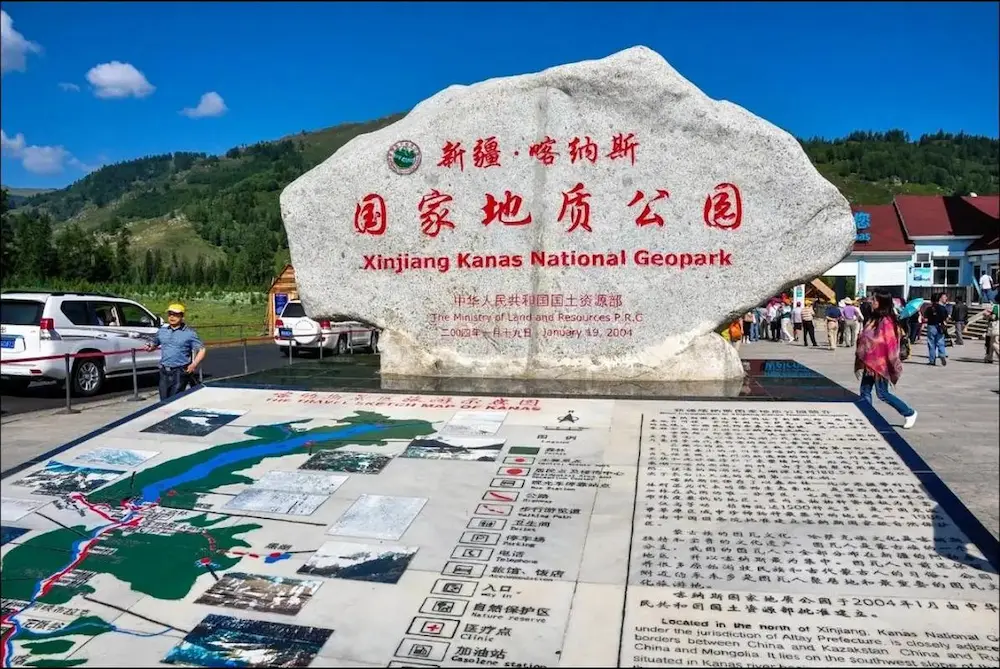
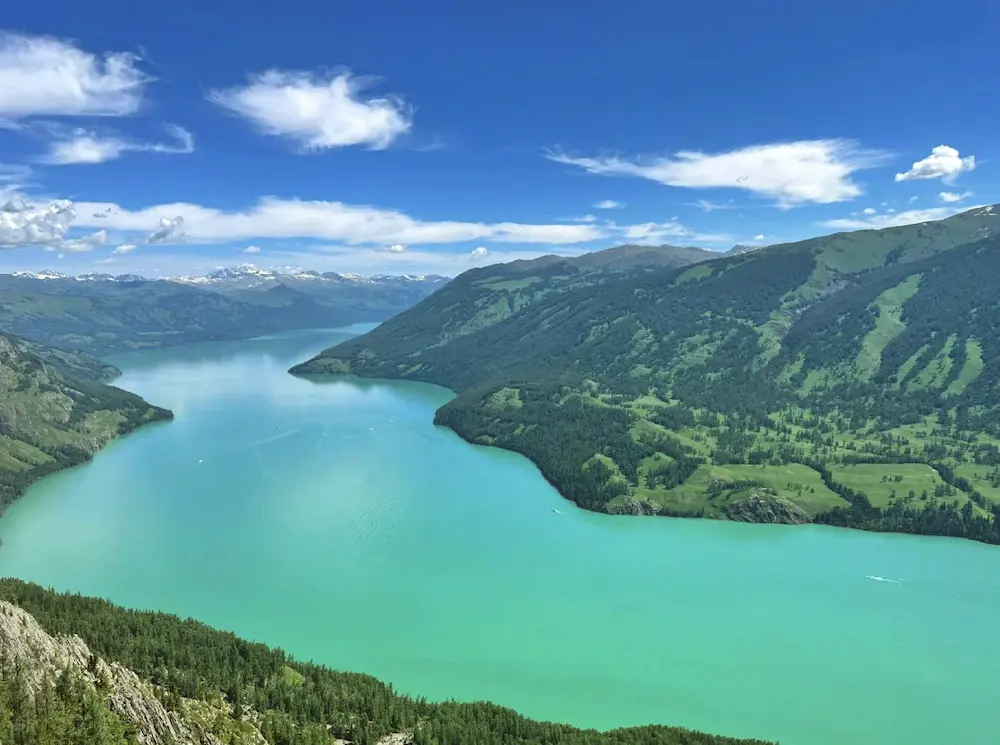
Kanas Lake is a high-altitude, inland freshwater lake nestled within the dense forests of the Altai Mountains. Situated at an elevation of 1,374 metres above sea level, it spans an area of 45.73 square kilometres and stands as China’s deepest glacial dammed lake. Reaching a maximum depth of 188.5 metres, the crescent-shaped lake receives its waters from glacial melt from mountains such as Kuitun and Friendship Peak, alongside local precipitation.
The scenic area lies within a cold-temperate zone, experiencing a winter lasting seven months with an average annual temperature of -0.2°C. The optimal visiting period spans May to October, offering cool, pleasant summers and vibrant autumns where forests are ablaze with colour.
2. Historical Development
Human activity in the Kanas region dates back eight to nine thousand years. Throughout history, nomadic tribes including the Saka, Hujie, Xiongnu, Rouran, Turkic peoples, and Mongols have inhabited these grasslands. Legend recounts that during his western campaigns, Genghis Khan rested here, marvelled at its beauty, and named the lake ‘Khanaus’ (meaning ‘Khan’s Water’).
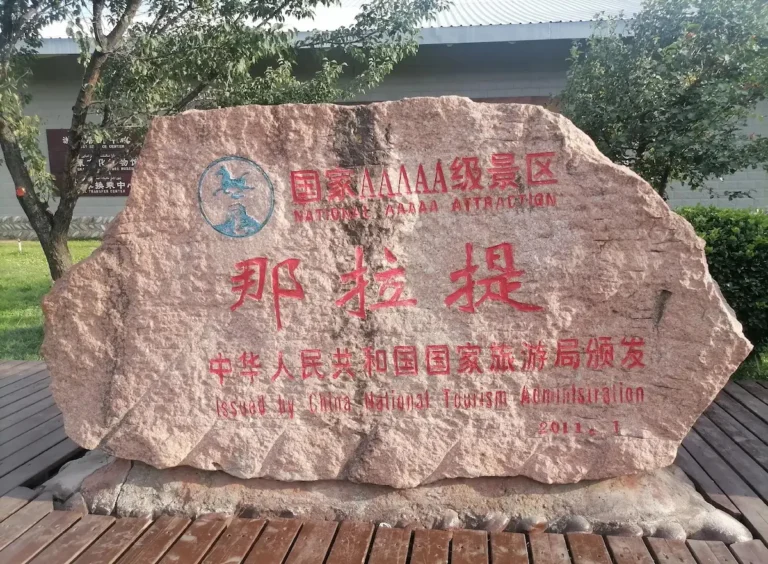
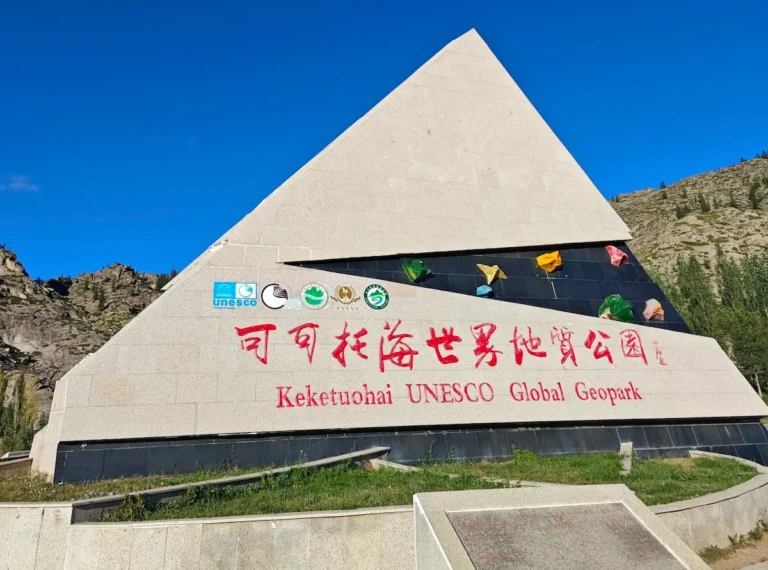
Since the year 2000, the Kanas Scenic Area has garnered numerous accolades, including designation as a National 5A Tourist Attraction, a National Geopark, and a National Forest Park, establishing itself as the flagship destination for tourism in Xinjiang.
II. Detailed Guide to Major Attractions: Natural Wonders and Cultural Heritage
1. Core Attractions of Kanas Lake
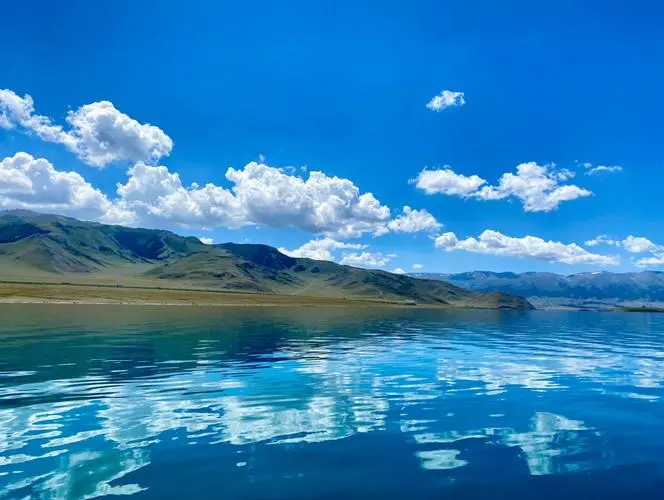
Kanas Lake forms the heart of the scenic area, famed for its legendary ‘lake monster’. The lake boasts several remarkable features: Firstly, the kilometre-long deadwood embankment, formed when driftwood is driven upstream by fierce valley winds and accumulates in the upper reaches; Secondly, the lake’s colour-shifting phenomenon, where its waters display hues ranging from pale grey and azure blue to milky white and deep emerald green across different seasons and weather conditions.
The Fish Viewing Platform offers the optimal vantage point for surveying the entire panorama of Kanas Lake. Standing 19 metres high, it presents a vertical drop of over 660 metres to the lake surface. Originally named the Fish Viewing Pavilion due to its prime location for observing the ‘lake monster,’ it was first constructed in 1987. Ascending the Fish Viewing Platform is an indispensable experience in any Kanas itinerary; without it, one cannot fully appreciate the lake’s supreme beauty.
2. The Essence of the Three Bays
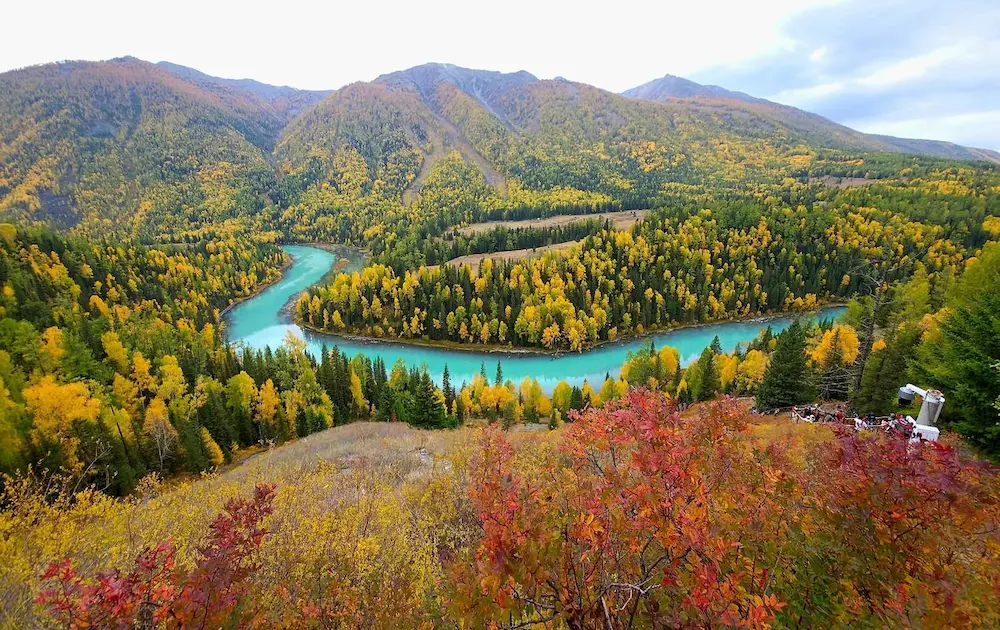
Moon Bay, shaped like a crescent moon, features emerald waters flanked by dense forests, making it a paradise for photography enthusiasts. Traveling approximately 1 kilometre north along the Kanas River from Dragon Bay, you will encounter this blue, crescent-shaped bay nestled within the gorge.
Fairy Bay lies roughly 3 kilometres north of Moon Bay, spanning an area of about 6 square kilometres. Here, the river carves the forest and grasslands into a series of islands that appear both connected and disconnected. When viewed against the light, the lake surface sparkles with fine glints under sunlight, resembling countless scattered pearls. Frequently shrouded in mist, it evokes a fairyland, hence the name Fairy Bay.
Wolong Bay lies en route from Burqin County to Kanas, 140 kilometres from the county seat. It serves as the outflow channel for Kanas Lake. Covering approximately 9 hectares, the bay’s centre features a lush sandbar resembling a giant dragon lying dormant in the waters, hence its name.
3. Tuvan Village
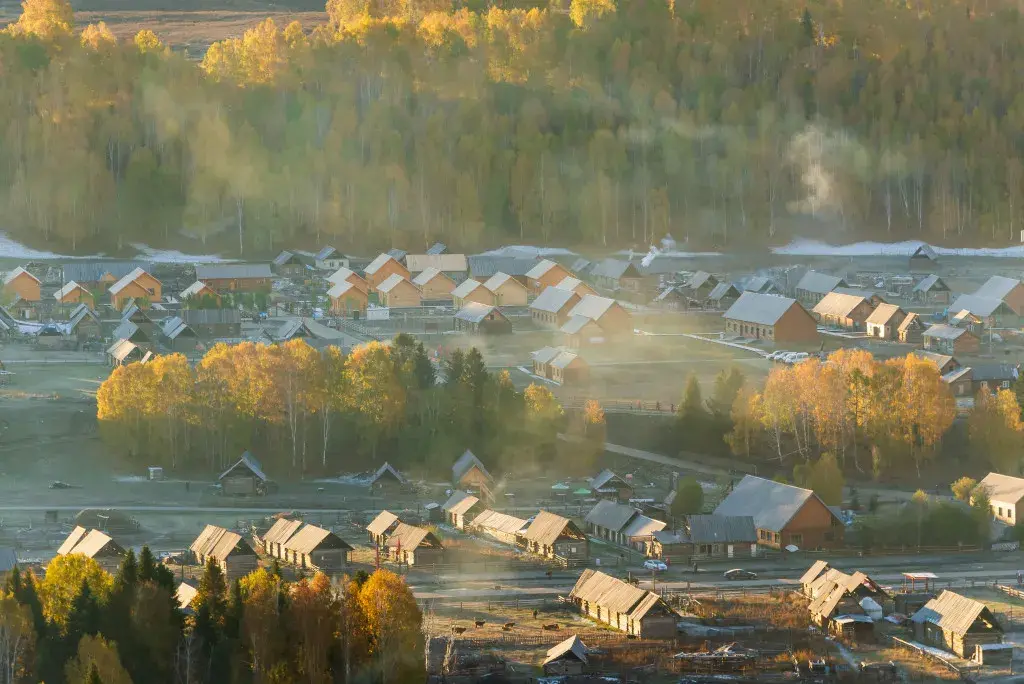
Hemu Village, situated in China’s northernmost township in the west, serves as the primary settlement for the Tuvan people. It stands as the most remote and largest of the three remaining Tuvan villages. The most striking feature of the village is its cluster of small wooden houses. Nestled amidst the mountains on an open plain, the Tuvan dwellings with their distinctive pointed roofs are arranged in a pleasingly staggered pattern. Together with the surrounding snow-capped peaks, forests, grasslands, and the blue sky dotted with white clouds, they form a unique natural and cultural landscape, earning it the title of ‘China’s Premier Village’.
Nestled within a valley of the Altai Mountains, Baihabah’s dwellings are constructed entirely from logs. These uniform, gabled timber-framed houses feature walls and ceilings built from whole logs, joined together and topped with wooden planks supporting a distinctive gable roof. This creates an atmosphere reminiscent of a European village.
III. Practical Travel Information: Itinerary Planning and Costs
1. Admission Fees and Opening Hours
Kanas Scenic Area is generally open from 8:00 to 20:00, though hours may vary seasonally. Admission costs 160 RMB per person, with shuttle bus fares charged separately (one-way shuttle bus: 70 RMB per person; and 110 RMB per person for a return ticket for a second shuttle ride).
The scenic area also offers various combined ticket options. For example, the adult ticket for Kanas Scenic Area + Hemu Scenic Area + Baihabah Winter All-Area Scenic Area costs 100 RMB.

2. Recommended Itineraries
Essential One-Day Tour:
Scenic Area Entrance → Kanas Lake → Fish Viewing Platform → Kanas Village → Three Bays (Fairy Bay, Moon Bay, Dragon Bay). This route suits visitors with limited time, allowing access to key attractions via shuttle bus.
Two-Day In-Depth Route:
Day 1: Scenic Area Entrance → Kanas Lake → Fish Viewing Platform → Kanas Village (Overnight Stay)
Day 2: Kanas Village → Three Bays Hike → Baihabah Village → Return
Three-Day Comprehensive Route:
Day 1: Jiadengyu → Kanas Lake → Fish Viewing Platform → Overnight Stay in Kanas Village
Day 2: Kanas Village → Three Bays Hike → Baihabah Village → Overnight in Baihabah
Day 3: Baihabah Village → Hemu Village → Overnight in Hemu Village
3. Scenic Area Transport Guide
External Transport: Fly to Burqin Kanas Airport or Altay Airport, then take the complimentary scenic area shuttle or hire a vehicle to Kanas Scenic Area. Alternatively, take a train from Ürümqi to Altay City or Beitun City, then transfer to a long-distance coach or hire a private vehicle.
Internal Transport: During peak season, private vehicles may only reach the Jiadengyu car park, after which visitors must transfer to shuttle buses to enter the scenic area. A comprehensive shuttle bus system operates within the scenic area, connecting all major attractions.
IV. Unique Experiences and Activities
1. Seasonal Experiences
Spring (May–June): As the ice and snow melt, the lake water takes on a deep, dark blue-grey hue; wildflowers bloom profusely, creating a fresh and vibrant landscape.
Summer (July–August): The lake water reflects the greenery of the surrounding mountains, appearing pale green or turquoise; the climate is cool, making it an ideal summer retreat.
Autumn (September–October): The surrounding flora bursts into vibrant hues, while the emerald waters shimmer brilliantly, making this the prime season for photography.
Winter (November–April): The lake freezes over, cloaked in a blanket of snow, offering opportunities for ice and snow activities and glimpses into Tuvan winter life.
2. Recommended Activities
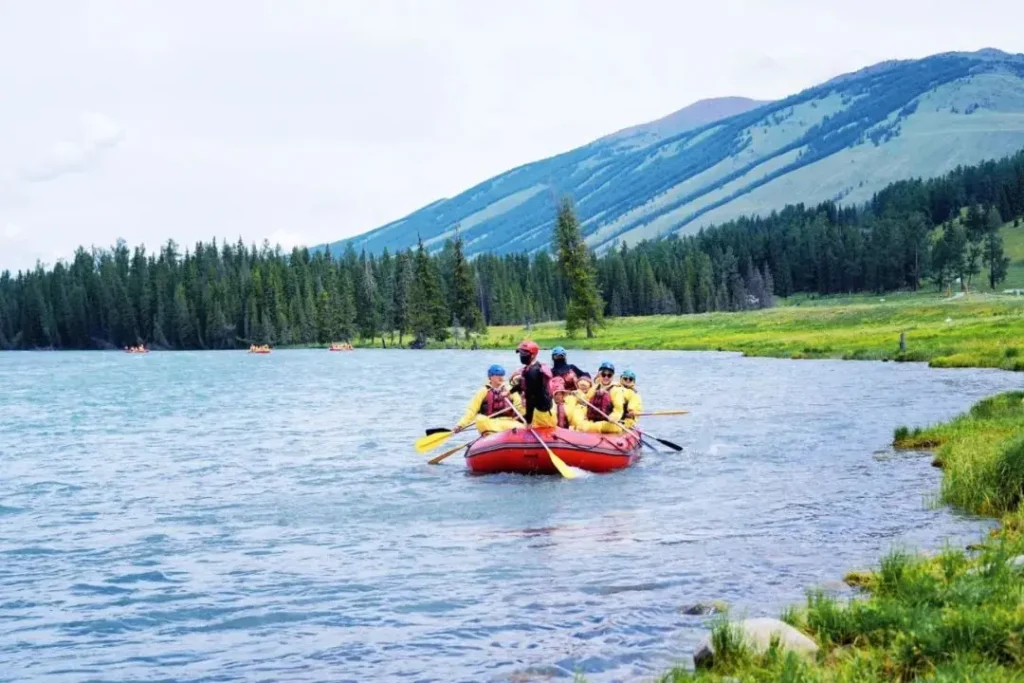
Rafting: The Kanas rafting adventure tests both physical stamina and courage. Participants navigate a 9-kilometre stretch of rushing rapids in inflatable rafts, taking approximately 80 minutes. Please note this activity is currently suspended; advance enquiry with the scenic area is required.
Hiking Adventures: Scenic trails connect the Three Bays, ideal for travellers seeking a leisurely immersion in natural beauty. The Taiga Forest Corridor, spanning 4.5 kilometres, encapsulates the essence of West Siberian taiga.
Cultural Experiences: Participate in local herders’ seasonal migration to understand nomadic traditions; immerse yourself in unique folk customs at Tuvan villages such as Hemu Village and Baihabah Village.
V. Dining and Accommodation Guide
1. Local Cuisine
The scenic area offers Xinjiang specialities such as roasted buns and naan bread. Nearby Kazakh herders provide traditional delicacies including milk tea and hand-pulled meat, allowing visitors to experience local culinary culture. In autumn, wild mushrooms can be sampled, offering a taste of nature’s bounty.

2. Accommodation Options
Kanas Village: Offers diverse lodging choices ranging from budget guesthouses to comfortable hotels, with relatively reasonable pricing.
Hemu Village: Features distinctive log cabin accommodation, allowing guests to experience traditional Tuvan dwellings at moderate rates.
Baihabah Village: A smaller settlement with limited lodging options, yet providing an opportunity to immerse in more authentic Tuvan life.
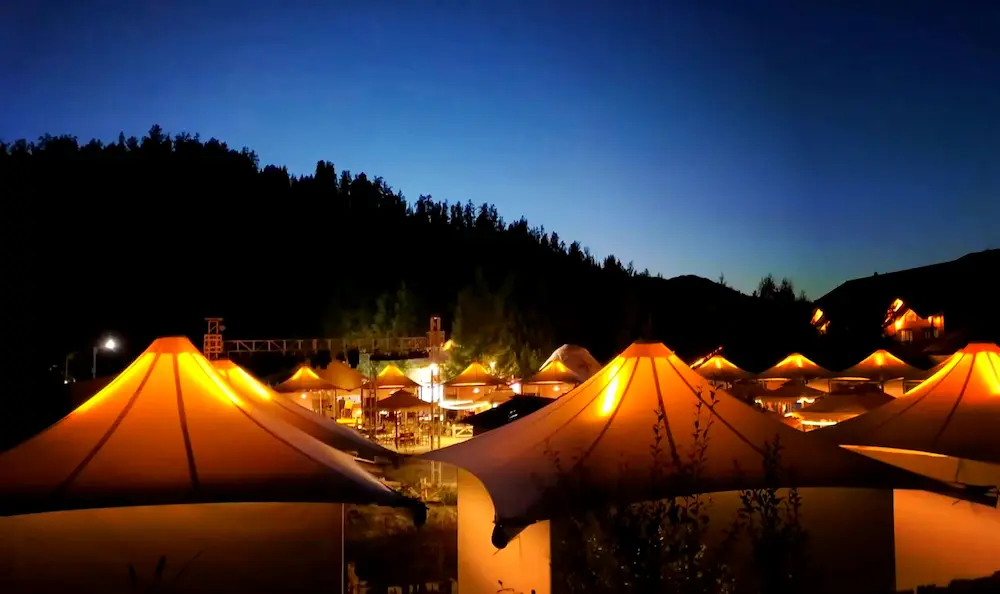
Jiadengyu: A comprehensive service area at the scenic area entrance, featuring well-equipped hotels ideal for self-drive travellers.
VI. Travel Tips and Considerations
1. Recommended Visiting Periods
Photography enthusiasts: Late September to early October, when autumn colours are at their most enchanting.
Summer visitors seeking cooler temperatures: July to August, offering pleasantly cool weather.
Snow enthusiasts: December to February, when the landscape is blanketed in snow, ideal for winter activities.
2. Practical Advice
Temperature variations are significant within the scenic area; warm clothing is advisable even in summer.
Obtain border permits in advance (required for visiting Baihabah Village).
Protect the environment by disposing of rubbish properly.
Respect local ethnic customs and traditions.
Book accommodation well in advance, particularly during peak seasons.
3. Safety Considerations
Winter snowstorms may occur, potentially stranding vehicles. Mountain weather is unpredictable; monitor forecasts and plan itineraries accordingly. Hikers must adhere to park regulations and refrain from entering restricted areas.
-
Do I need a visa to visit Xinjiang?
Yes, you need a valid Chinese visa. Some areas near borders may require additional permits.
-
What is the best time of year to visit Xinjiang?
The best time is from May to October. July and August are peak season with the best weather.
-
How many days do I need for a Xinjiang trip?
We recommend at least 7-10 days to see the highlights of both northern and southern Xinjiang.
-
Is it safe to travel to Xinjiang?
Yes, Xinjiang is safe for tourists. The region has extensive security measures and low crime rates.